
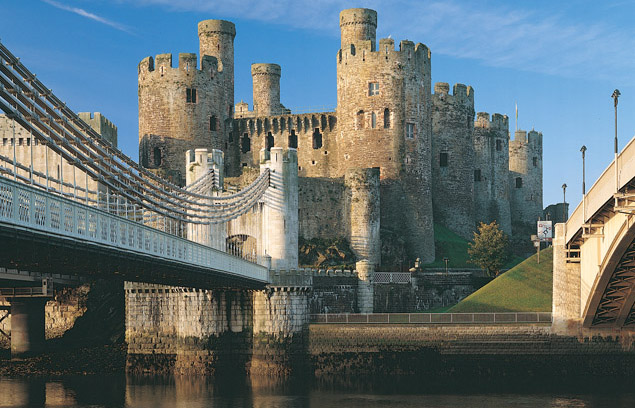
Conwy Castle is a fortification build by Edward I between 1283 and 1289 as part of a project to create the walled town of Conwy, a large defensive structure. It’s considered by UNESCO as one of “the finest examples of late 13th century and early 14th century military architecture in Europe“.
The castle played an important part in several events, such as the siege of Madog ap Llywelyn in 1294–95 and the imprisonment of for Richard II in 1399.
The rectangular castle is built from local and imported stone and occupies a coastal ridge. It’s divided into an Inner and an Outer Ward and defended by eight large towers and two barbicans, and it originally overlooked an important crossing point over the River Conwy.
Conwy Castle retains the earliest surviving stone machicolations in Britain and what’s been described as the “best preserved suite of medieval private royal chambers in England and Wales“.
Visit Conwy Castle
Facilities
Hours
10am – 4pm Monday – Saturday
11am – 4pm Sunday
Address
Rose Hill St, Conwy LL32 8AY
Phone
01492 592358
Prices
| CADW Member – Join now | Free |
| Adult | £9.90 |
| Family* | £28.90 |
| Disabled and companion | Free |
| Juniors (Aged 5-17) / NUS / Armed Forces and Veterans | £6.00 |
| Seniors (Aged 65+) | £8.00 |
Location
Conwy Castle Gifts
Similar Castles

Framlingham Castle
Framlingham Castle has no central keep but a curtain wall with 13 towers.
Newark Castle
Newark Castle is a 12th century castle by Alexander, Bishop of Lincoln.
Corfe Castle
Corfe Castle is a ruined castle on the route between Wareham and Swanage.
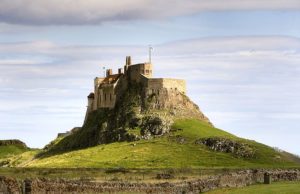
Lindisfarne Castle
Lindisfarne Castle is a 16th-century castle located on Holy Island.
More to see in Wales

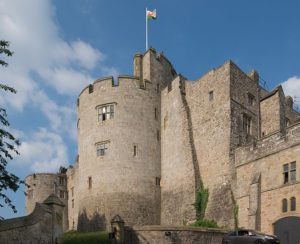
Chirk Castle
Chirk Castle is a Grade I listed castle built in 1295 near Wrexham, Wales.
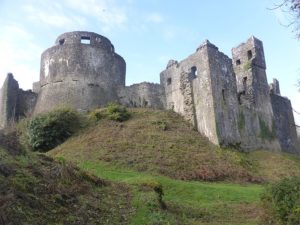
Dinefwr Castle
Dinefwr Castle is a ruined castle that was the chief seat of the Kingdom of Deheubarth.
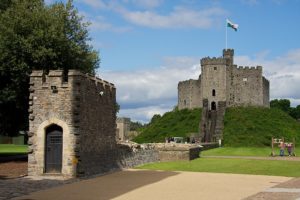
Cardiff Castle
Cardiff Castle is a medieval castle built in the late 11th century by Norman invaders.
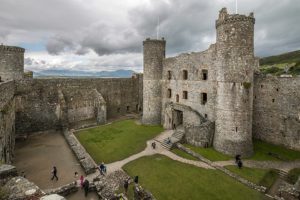
Harlech Castle
Harlech Castle is a medieval fortification constructed atop a spur of rock in 1282.