
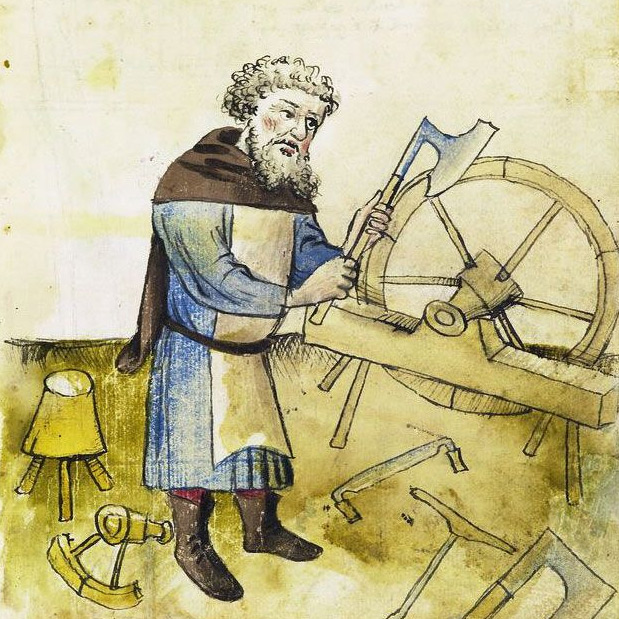
Medieval wheelwrights built or repaired wooden wheels. “Wright” comes from the Old English word “wrytha”, and means a worker or shaper of wood.
These tradesmen made wheels for wagons, carts, traps and coaches. They also made the wheels and frames for home use.
Although most wheels were made from wood, other materials were sometimes used, such as bone and horn.
Short History of the Wheel
Over millennia, the appearance of the wheel barely changed. However, small changes in design helped improve its functionality and strength significantly.
The earliest wheels, such as those used for chariots, were bound by rawhide. It was applied wet and shrank as it dried, compressing the woodwork together. Centuries passed and the wheel evolved to be strakes with iron; iron plates were nailed to the felloes to protect against wear on the group. These plates also kept the wheel together. Staking was a slightly less skilled practice, so it would be done with less equipment and less knowledge.
How to Make a Wheel
Wheelwrights first constructed the hub or nave, then the spokes and the rim/felloe segments, and lastly assembled them into a unit working from the center of the wheel outwards.
Books about Medieval Life
More Medieval Occupations

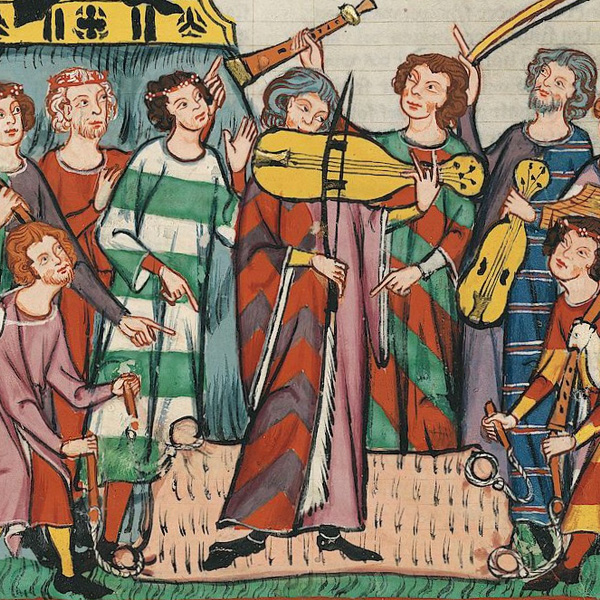
Medieval Minstrel
Medieval minstrels sang, played musical instruments, and told engaging stories. Here’s what life was like for a minstrel in the Middle Ages.
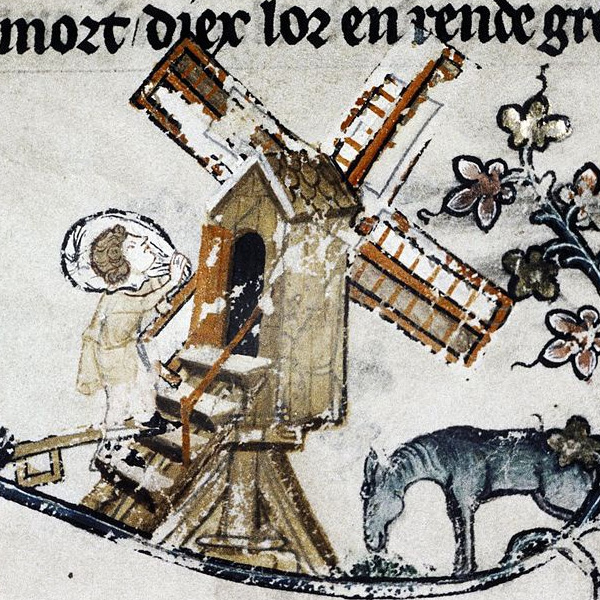
Medieval Miller
Millers were some of the most important tradesmen in the Middle Ages. Learn more about this medieval profession and how millers lived.
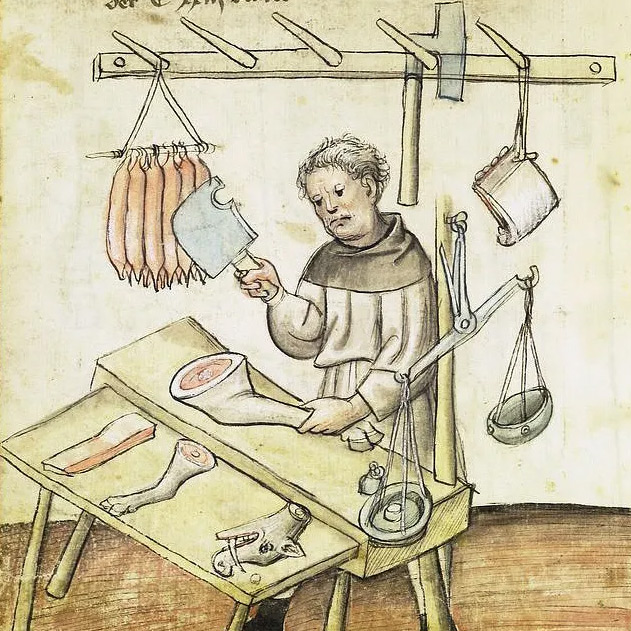
Medieval Butcher
Middle Ages butchers prepared meat, fish, and fowl for the people in a castle or a city. They sometimes had stalls in a marketplace.
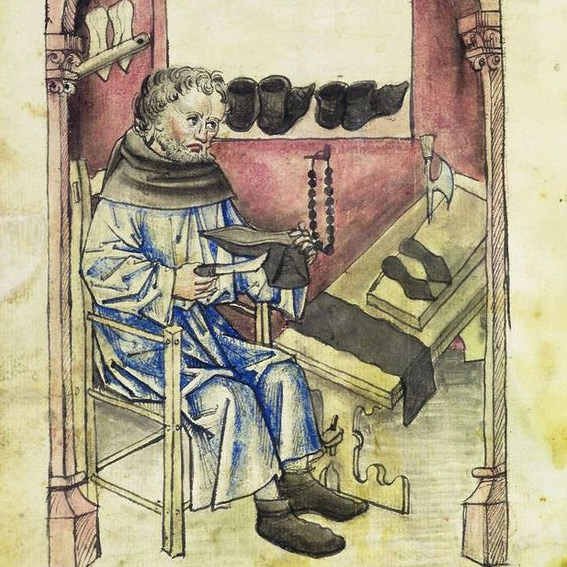
Medieval Shoemaker
Medieval candlemakers made candles from materials such as fat, tallow and beeswax.
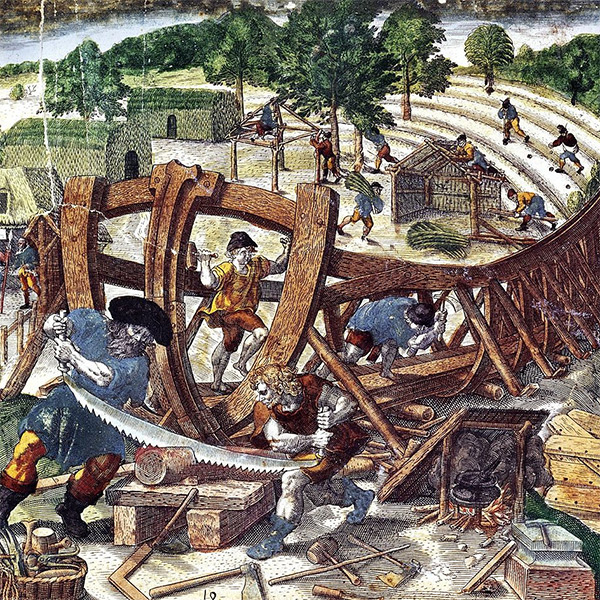
Medieval Shipwrights and Shipmaking
Being a sailor in the middle ages meant living a lonely and difficult life, as they would often set sail for months or even a year at a time.
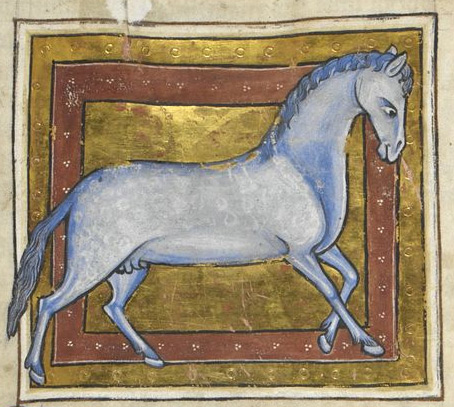
Medieval Stable Master and Grooms
Medieval Stable Master and Grooms were responsible for horses and stables.