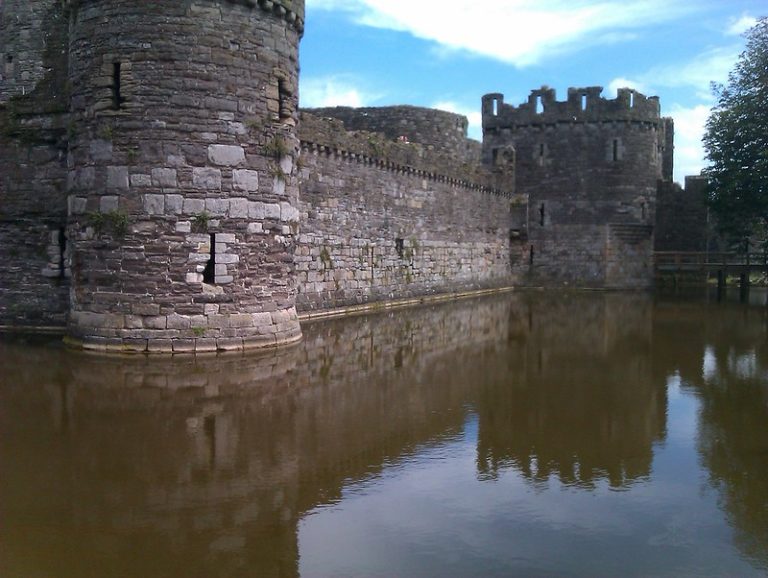
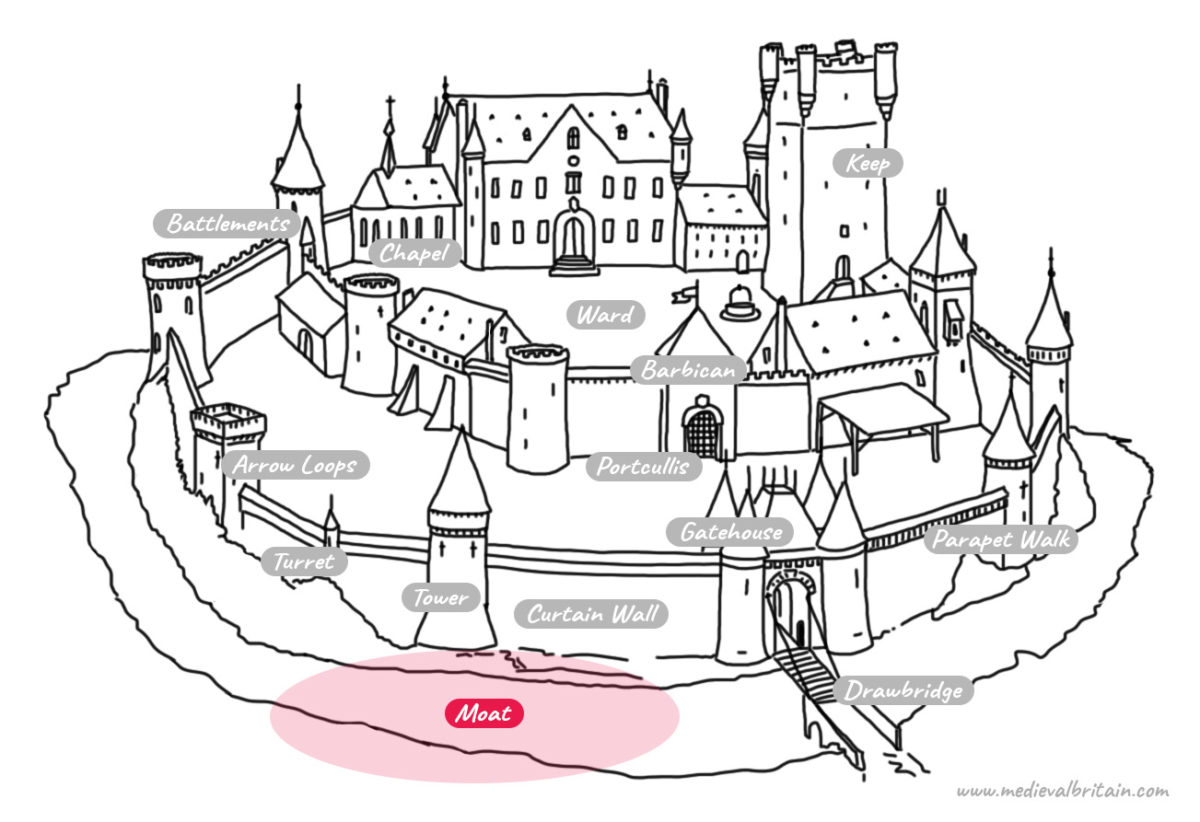
A moat was a ditch dug around a castle, fortification, building or town for defensive purposes. The moat could be kept dry or filled with water, and in some cases evolved into more extensive water structures like lakes, dams and sluices.
Medieval moats were excavated immediately outside the castle walls to make them more difficult to access by siege weapons, such as battering rams and siege towers. If they were filled with water, moats could also prevent the digging of tunnels under the castle.
Some of the earliest evidence of moats can be found in ancient Egyptian and Nubian castles. Moats were also used by the Babylonians and Assyrians.
Medieval moats were excavated around castles and fortifications as part of their defence system. The word moat is adapted from the Old French motte, meaning mound or hillock. It was first applied to the central mound that housed the castle (motte and bailey) and later to the excavated ring around it.
In later periods and as siege artillery developed, moats became more ornamental or were used as a sewer.
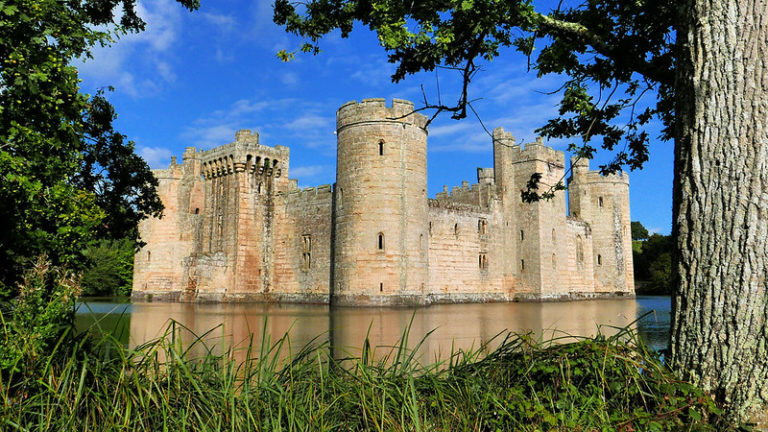
The moat around Bodiam Castle. CC image courtesy of Tom Lee and Flickr Commons.
Making and Overcoming Medieval Moat
Very few castles had the advantage of access to fresh flowing natural water – for example formed by the loop of a river. Most of them had to be man-made.
A good way of creating a moat was by constructing a special dam to channel nearby rivers and streams. This would create a stagnant pool around the castle. With an average depth of about 30 feet, stagnant moats were as effective as “living” ones for preventing attackers and siege engines reach the castle walls. Moats also prevented attackers fromtunnelling underneath the castle walls.
To overcome a moat, one method used was to create a makeshift bridge. Attackers could also sail a barge.
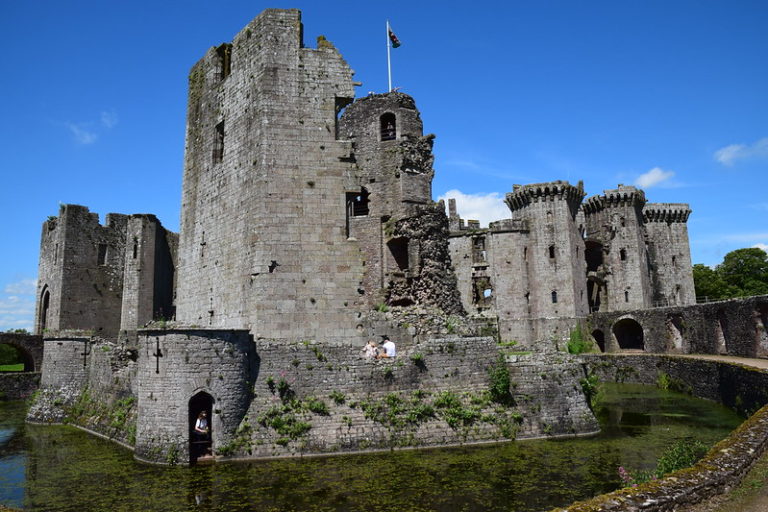
The moat around Raglan Castle. CC image courtesy of Hugh Llewelyn and Flickr Commons.