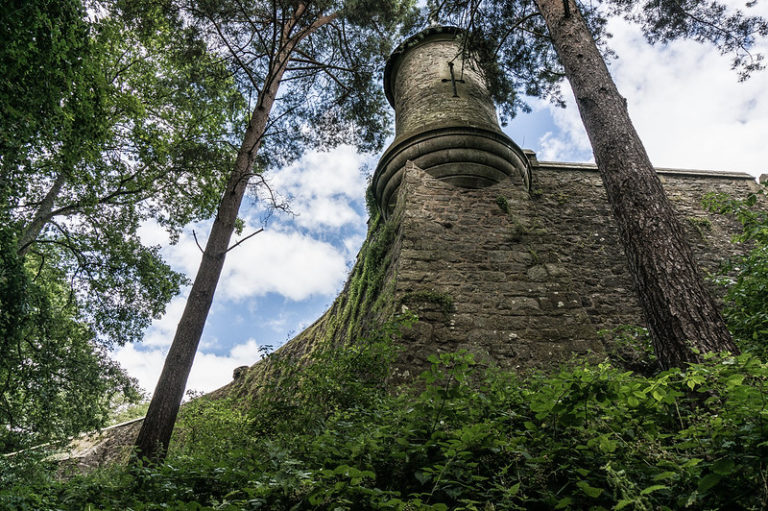
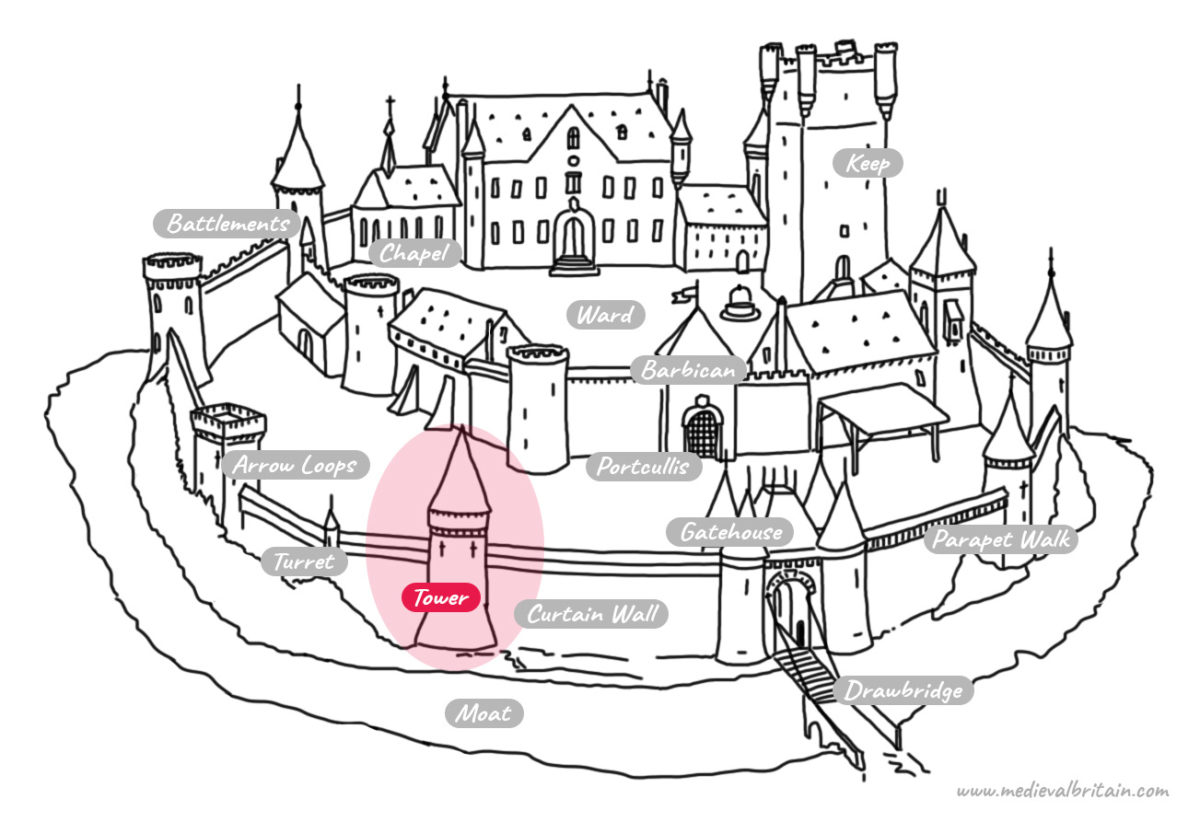
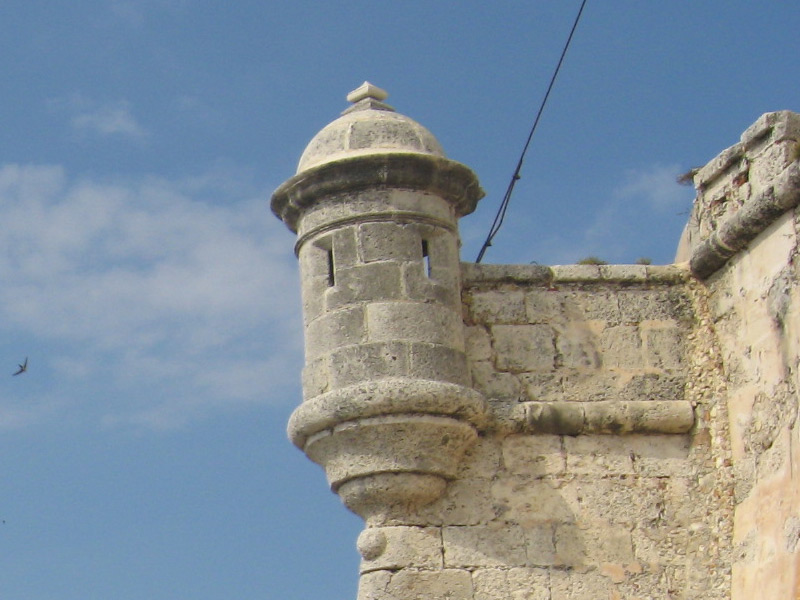
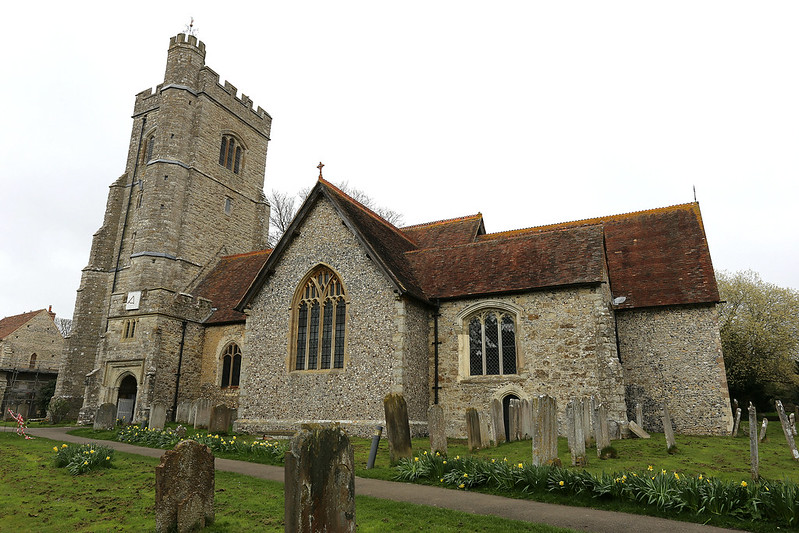
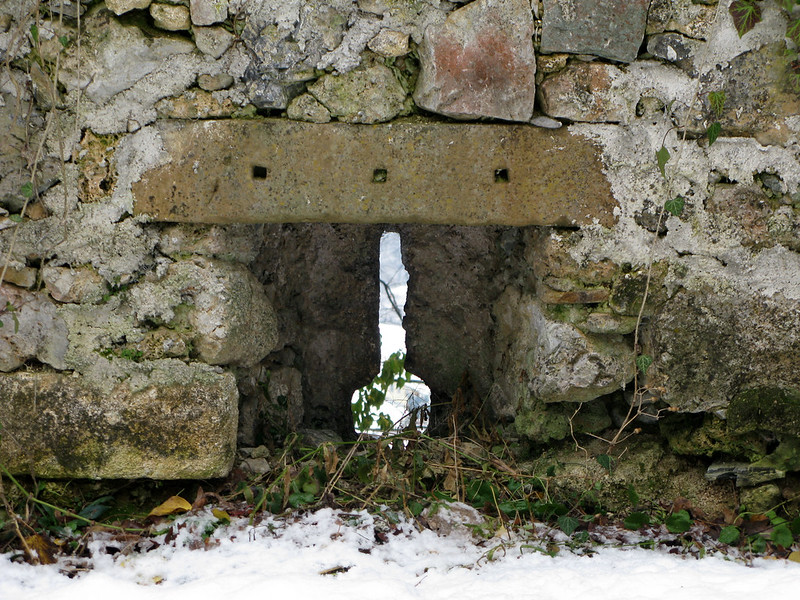
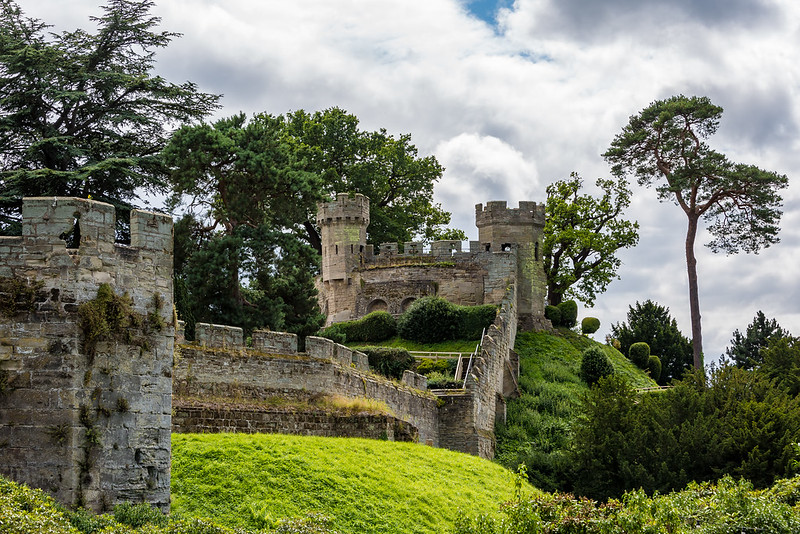
A castle’s tower was a fortified structure that provided flanking fire.
Rectangular towers gave a good amount of usable internal space. Round ones, or drum towers, were better against siege technology. Horseshoe or D-shaped towers were a compromise between the last two, good for resisting siege engines on the semicircular side and providing space on the rectangular space. There were also polygonal towers and other hybrid shapes.
Large towers were the strongest point of a fortification.
Wall towers (or mural towers) were good for providing flanking fire to the straight part of a curtain wall – either for crossbows or other projectile weapons. Large towers were used as a keep or bergfried and were usually the strongest point of a castle.
Towers were usually built around the gate, a vulnerable point in a castle. Corner towers enfiladed two adjoining wall faces. When they were too far apart, smaller additional flanking towers were added between them.
In crusader castles, there is also often a gate tower on top of the gate passage (so the passage leads through the base of the tower itself). European castles, however, tend to have towers on the sides of the gatehouse.
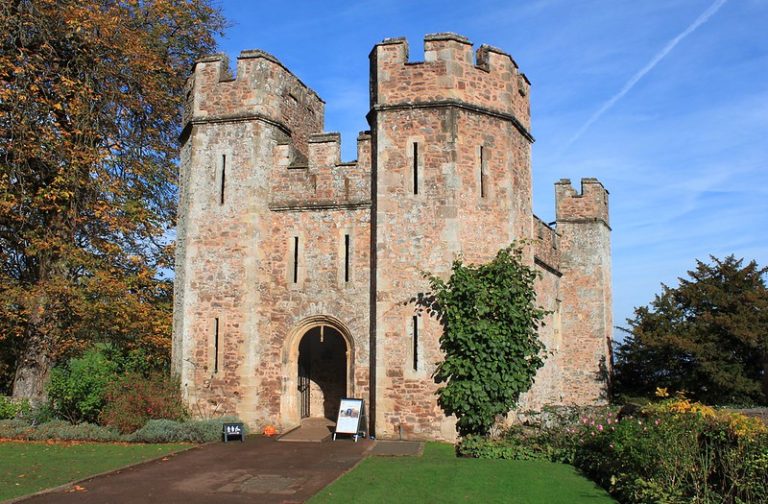
Castle towers from the Tenants Hall at Dunster Castle. CC image courtesy of Ian Turk and Flickr Commons.
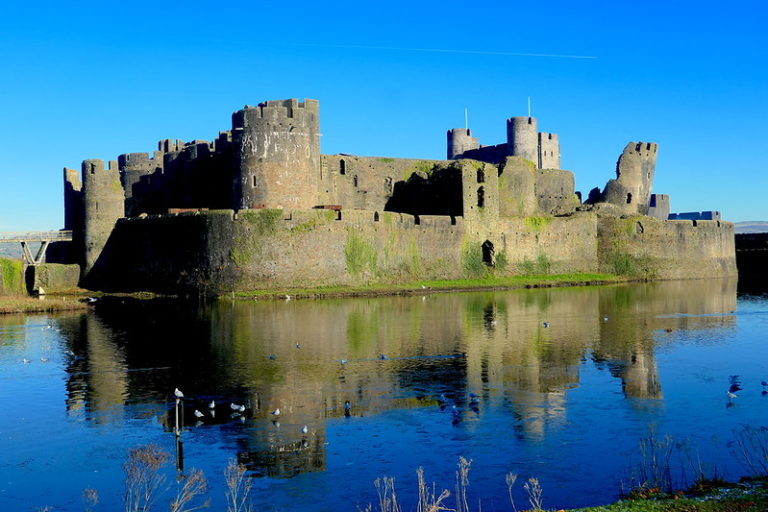
Different castle towers and walls from Caerphilly Castle. CC image courtesy of Richard Szejkowski and Flickr Commons.