
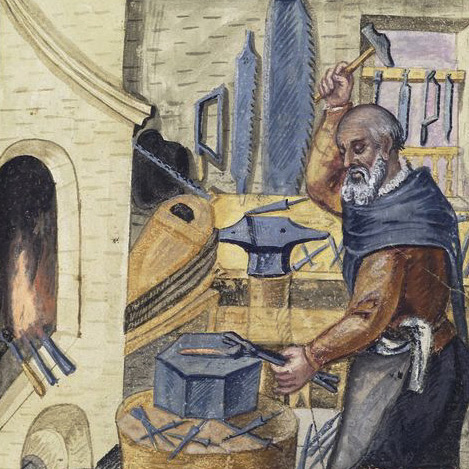
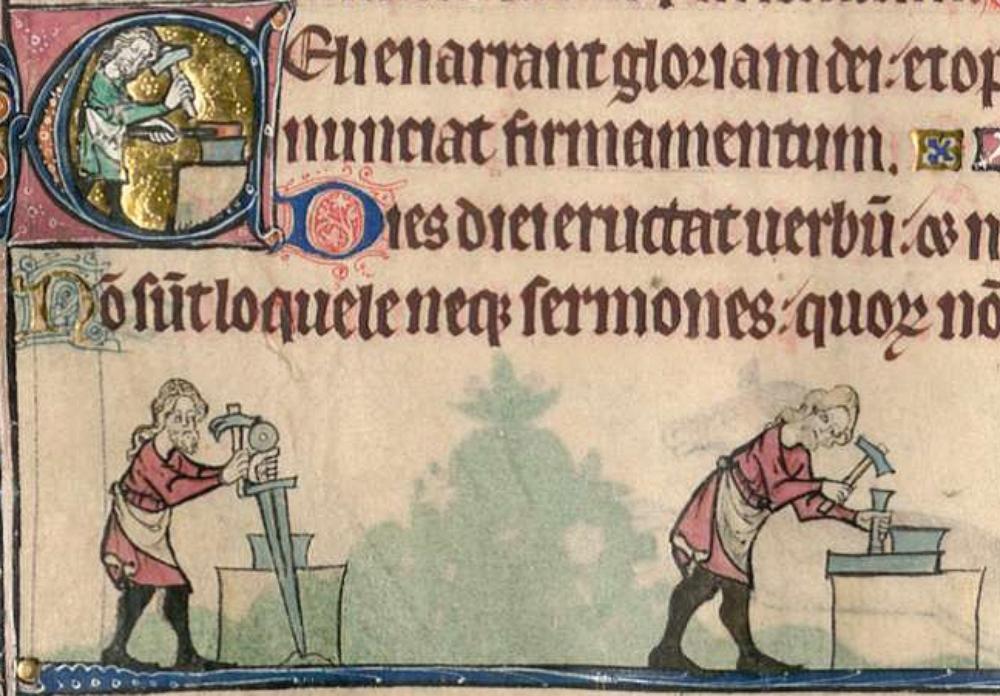
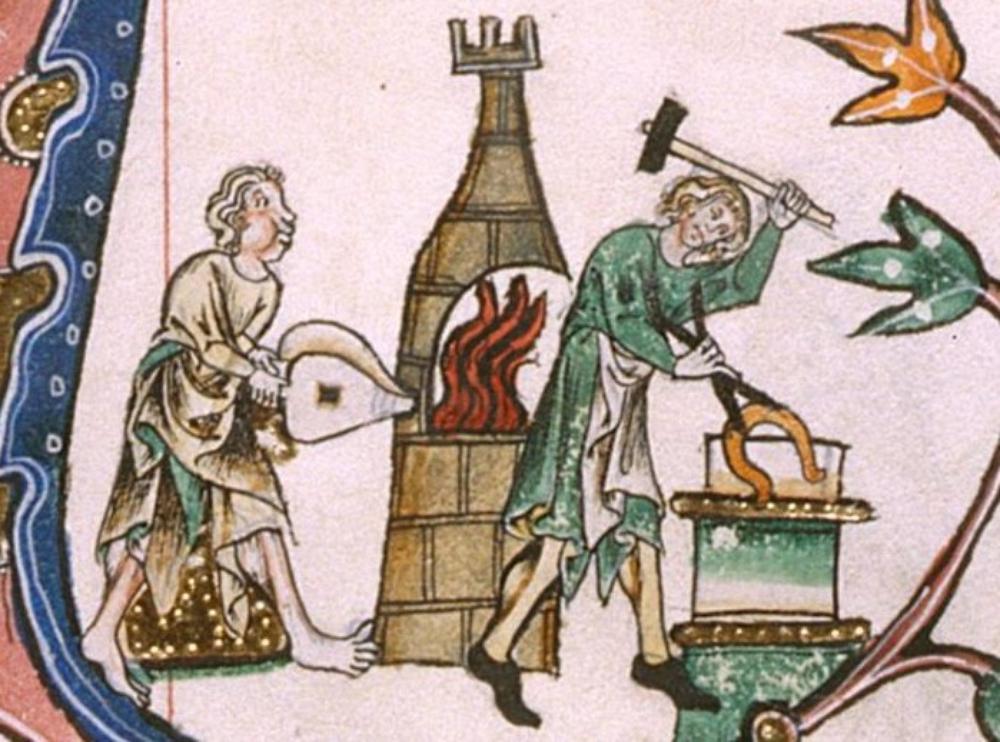
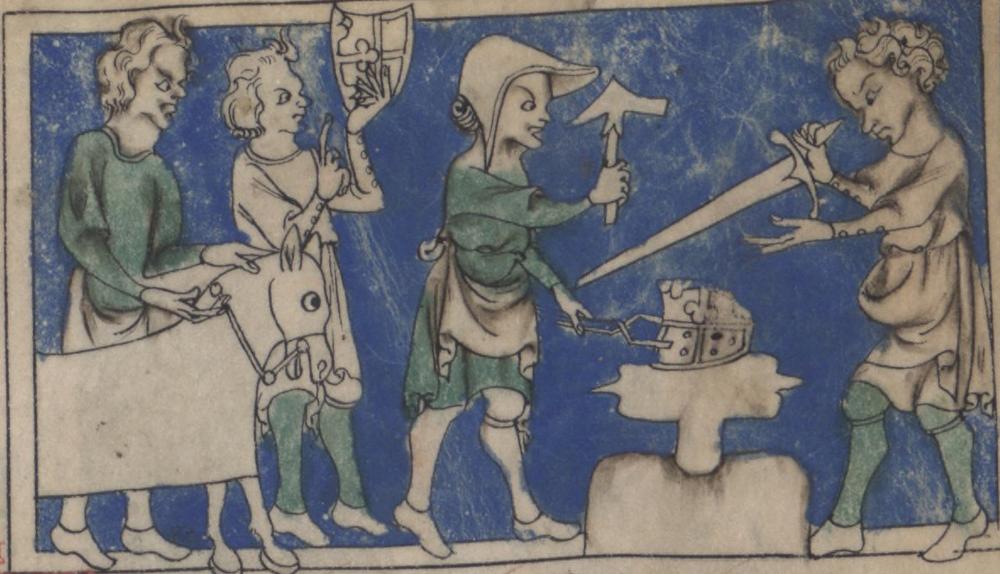
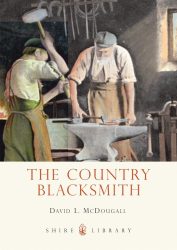
Blacksmiths were a staple of every medieval town. They created objects from wrought iron or steel by forging the metal with tools to hammer, bend, cut, and produce objects such as weapons and utensils.
The “black” in “blacksmith” refers to the black layer of oxides that form on the metal surface during heating. Smith, on the other side, might come from the old English word “Smythe,” meaning “to strike.”
Blacksmiths heat pieces of metal until it becomes soft enough for shaping with hand tools, such as a hammer, an anvil, and a chisel.
History of Blacksmiths
During the Bronze Age, humans in the Mideast learned how to smelt, melt, cast, rivet, and forge copper and bronze (the last one being harder, more resistant to corrosion, and having a lower melting point). Much of the copper came from Cyprus’s island and most of the tin from the Cornwall region. Because copper and bronze cannot be hardened by heat-treatment, they have to be hammered for a long period of time.
Before the Iron Age, iron was not thoroughly understood – plus, it didn’t significantly improve on the qualities of existing bronze artifacts (unalloyed iron is soft, doesn’t hold an edge as well, and needs more maintenance). Iron ores were, however, more widely available.
In the medieval period, blacksmithing was considered part of the set of seven mechanical arts. The original fuel for forge fires was charcoal (coal only began to replace it during the 17th century).
Books about Blacksmithing in the Middle Ages
Books about Medieval Life
More Medieval Occupations

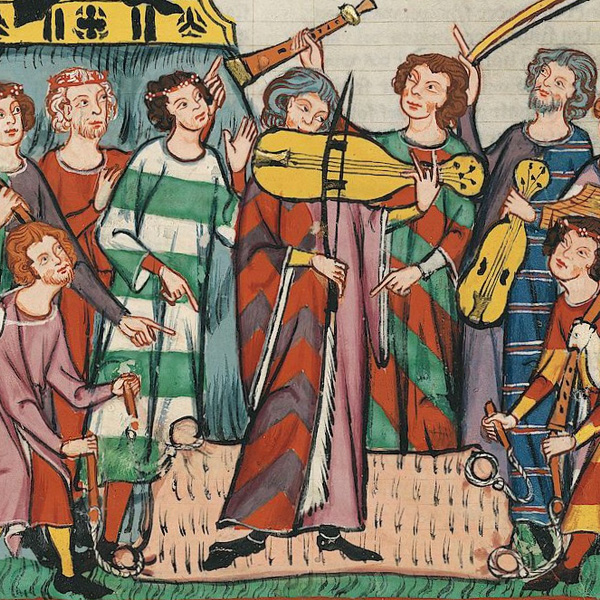
Medieval Minstrel
Medieval minstrels sang, played musical instruments, and told engaging stories. Here’s what life was like for a minstrel in the Middle Ages.
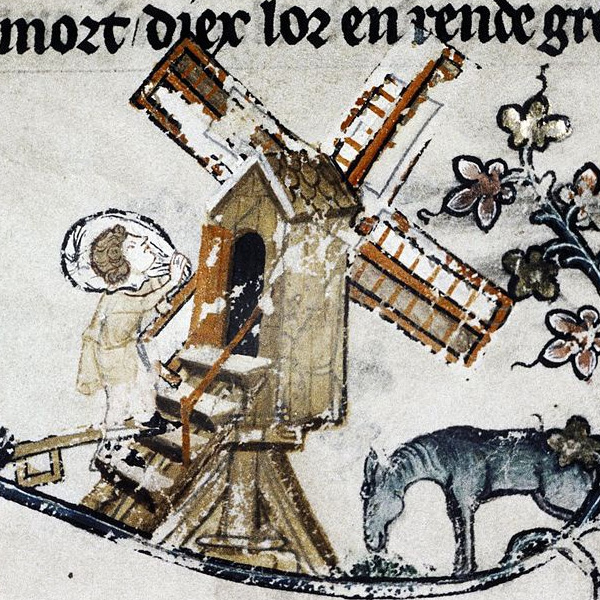
Medieval Miller
Millers were some of the most important tradesmen in the Middle Ages. Learn more about this medieval profession and how millers lived.
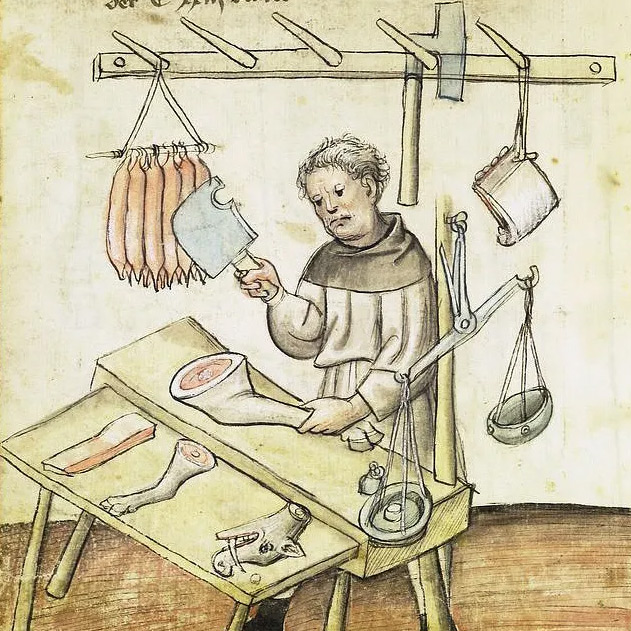
Medieval Butcher
Middle Ages butchers prepared meat, fish, and fowl for the people in a castle or a city. They sometimes had stalls in a marketplace.
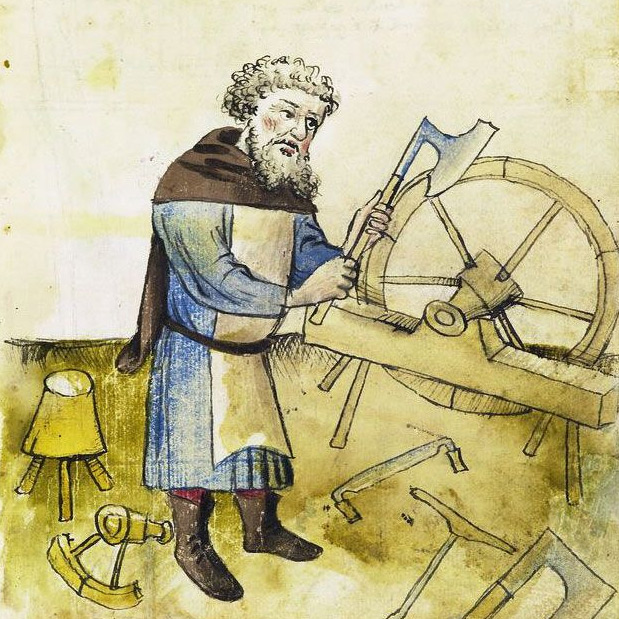
Medieval Wheelwright
Medieval candlemakers made candles from materials such as fat, tallow and beeswax.
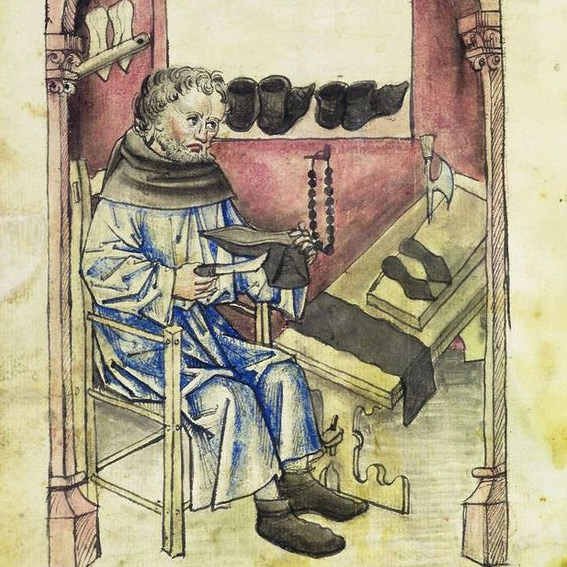
Medieval Shoemaker
Medieval candlemakers made candles from materials such as fat, tallow and beeswax.
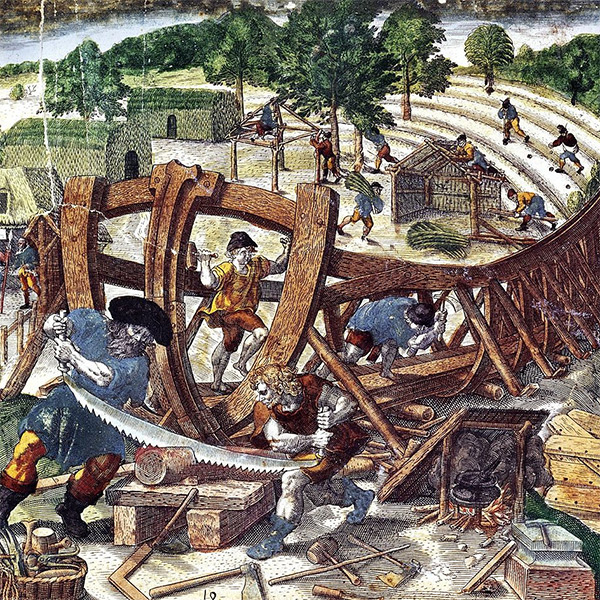
Medieval Shipwrights and Shipmaking
Being a sailor in the middle ages meant living a lonely and difficult life, as they would often set sail for months or even a year at a time.