
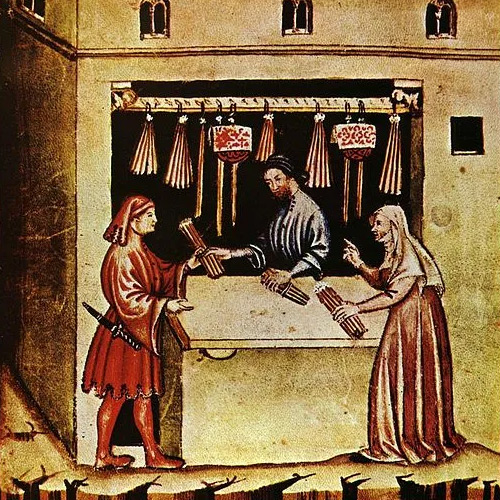
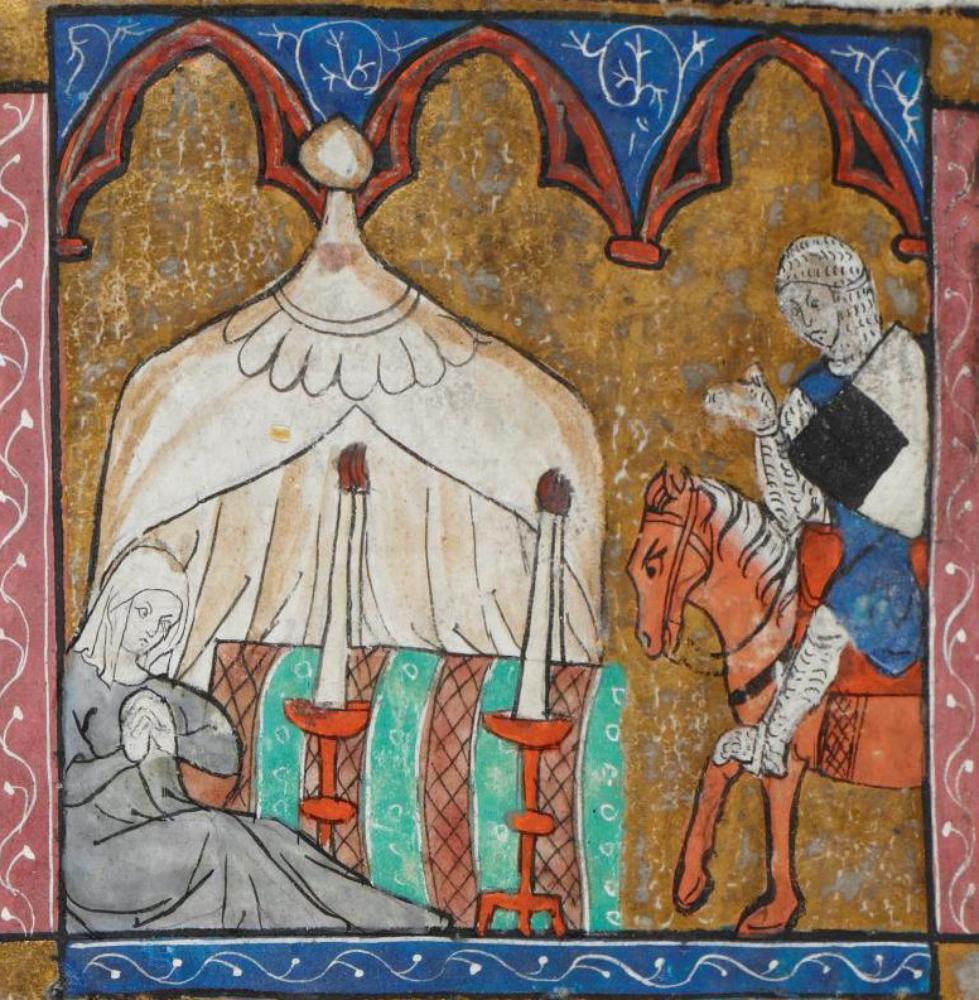
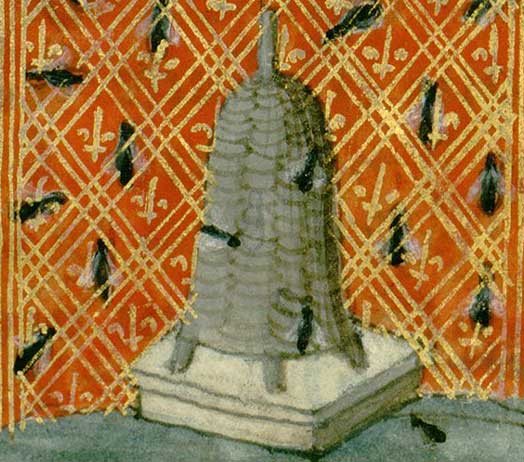
Medieval Candlemakers didn’t just make candles; they also had to know about the substances required for their craft.
Candles were commonplace throughout Europe in the Middle Ages, and candle-making was a relatively easy craft that provided just a modest income.
Early candles were mostly made from animal fats, and tallow from cows or sheep. In the Middle Ages, beeswax was introduced – it burnt pure and cleanly without producing a smoky flame. This material, however, could only be afforded by the rich and for certain churches and royal events.
History of Candlemakers
Candles were invented and developed independently by different groups of people as far as 5000 years ago. The Romans made them from tallow as early as 500 BC, while the Qin dynasty in China used whole fat around 221–206 BC. In India, temples boiled cinnamon to make candles, and the early Greeks used them to honor the goddess Artemis. The wicked candle is believed to have originated in Rome by dipping rolled papyrus repeatedly in melted tallow or beeswax.
When the Roman Empire collapsed, olive oil, the most common fuel for oil lamps, was suddenly widely unavailable throughout Europe. This is one reason why candles became more widespread, usually made from fats saved from the kitchen and accompanied by the manufacture of sauces, vinegar, soap, and cheese.
The most used material was tallow, fat from cows or sheep. Its smell was so unpleasant that its manufacture was banned by ordinance in several European cities. Fortunately, beeswax didn’t share the problem. However, only the rich could afford it.
Candle making became a guild craft in England and France in the 13th century.
Candle Making Materials
Tallow
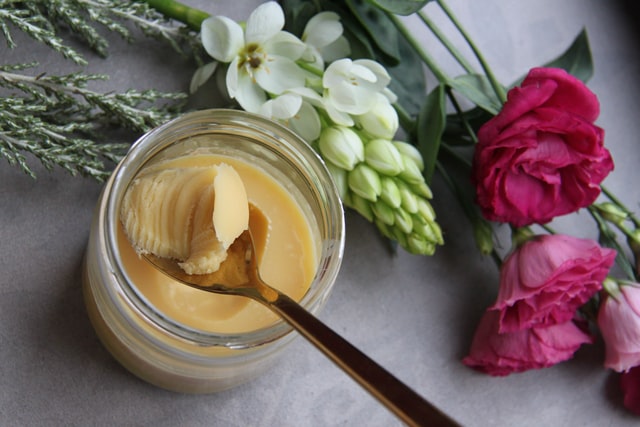
Tallow is a rendered form of beef or mutton fat made up mostly of triglycerides. It can be stored for extended periods without the need for refrigeration, as long as it’s kept in an airtight container to prevent oxidation. Tallow was the chosen material for molded candles for most middle ages and continued to be a cheap alternative after wax varieties became more widely available.
Beeswax
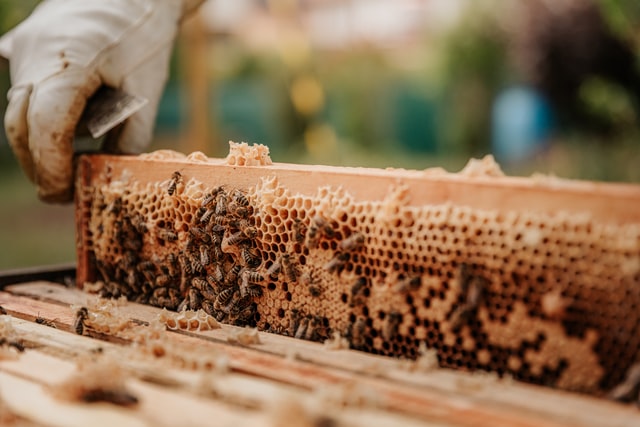
Beeswax is a natural wax produced by honey bees of the genus Apis, who produce them using glands in their abdominal segments. Chemically, beeswax is mainly made of fatty acids and long-chain alcohols. It’s believed that one kilogram of wax is used to store 22 kg of honey. Beeswax burns readily and cleanly, it never goes bad, and it can be heated and reused.
Books about Medieval Life
More Medieval Occupations

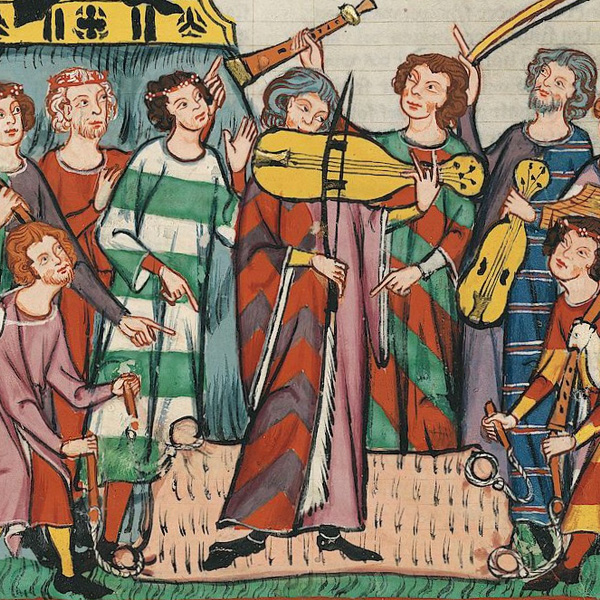
Medieval Minstrel
Medieval minstrels sang, played musical instruments, and told engaging stories. Here’s what life was like for a minstrel in the Middle Ages.
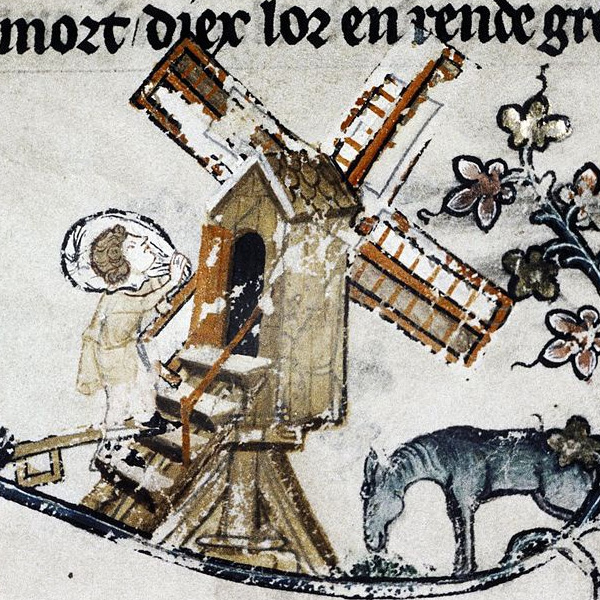
Medieval Miller
Millers were some of the most important tradesmen in the Middle Ages. Learn more about this medieval profession and how millers lived.
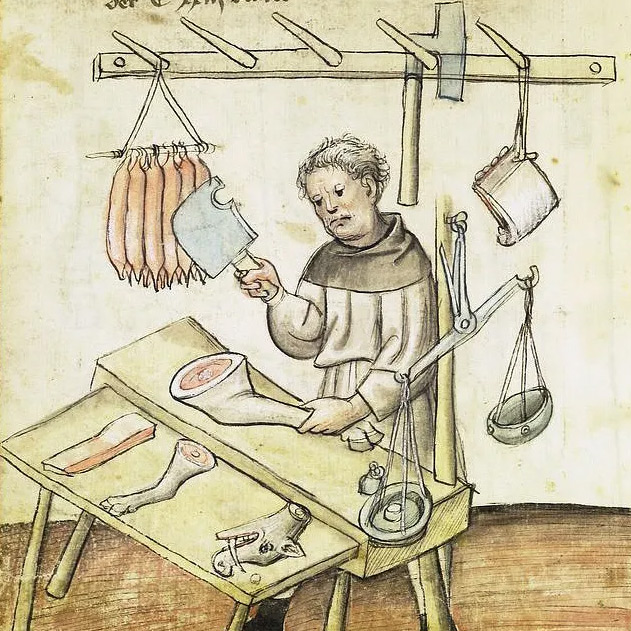
Medieval Butcher
Middle Ages butchers prepared meat, fish, and fowl for the people in a castle or a city. They sometimes had stalls in a marketplace.
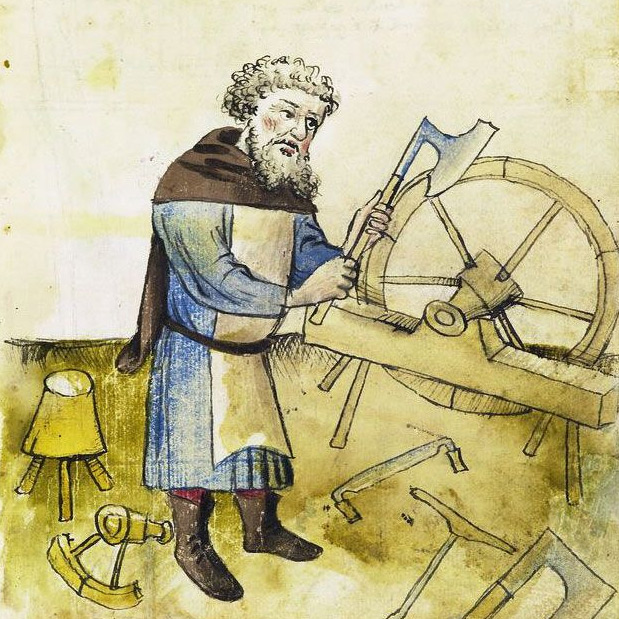
Medieval Wheelwright
Medieval candlemakers made candles from materials such as fat, tallow and beeswax.
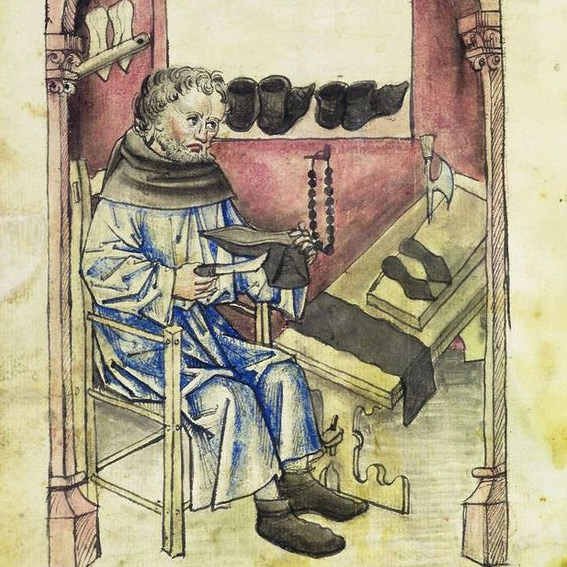
Medieval Shoemaker
Medieval candlemakers made candles from materials such as fat, tallow and beeswax.
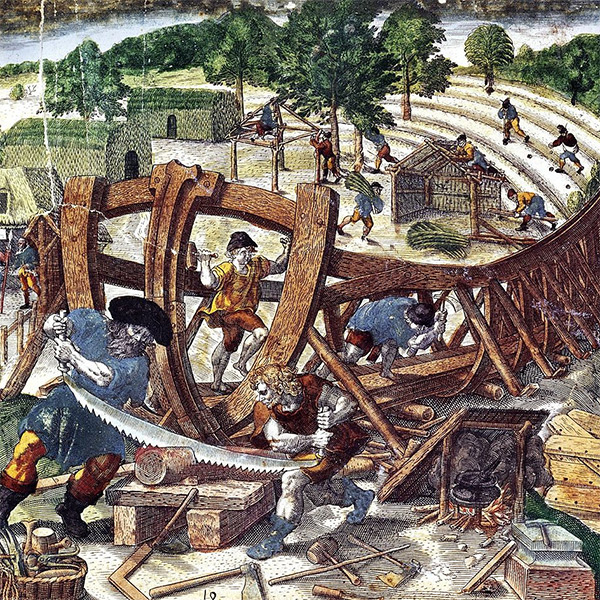
Medieval Shipwrights and Shipmaking
Being a sailor in the middle ages meant living a lonely and difficult life, as they would often set sail for months or even a year at a time.