
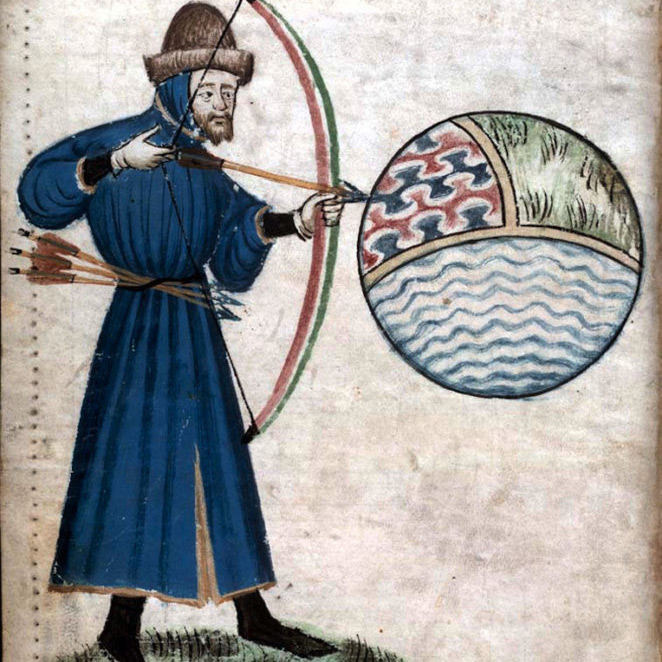
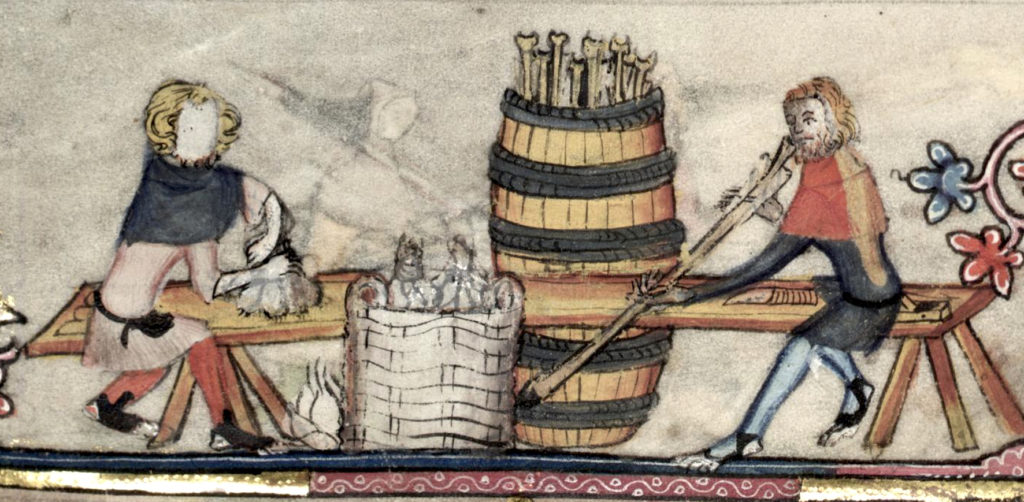
Medieval Fletchers or arrow makers ofter worked closely with bow makers. The Fletcher used a variety of equipment to fashion arrows. They were usually recruited into armies – one might require ten or so fletchers and their apprentices.
Arrows were stabilized via counterweight “fletchings” or feather quills. How far an arrow travelled was determined by the wood body shaft and the shaping of the vanes. Various heads could be attached, each one serving a specific purpose.
Working as a Fletcher
Alongside the spear and the sword, the arrow was once the number one chosen battlefield weapon. Fletchers were in a position of high demand. Whilst bowyers and fletchers were usually men, it is likely that some stringers were women, because the work required a great deal of manual dexterity.
During the Hundred Years’ War (which lasted from the year 1337 to 1453) there was a huge demand for bows and arrows. Edward III, for example, had many made for his archers. An English army going to France might have needed to take hundreds of thousands of arrows with them.
Because English counties had to supply each their quota of bows and arrows when required, the quality varied a lot. By the 14th century, however, guilds for bowyers and fletchers were established. These ensured not only that bows and arrows were only made by trained men but that they achieved the necessary standards.
Making an Arrow
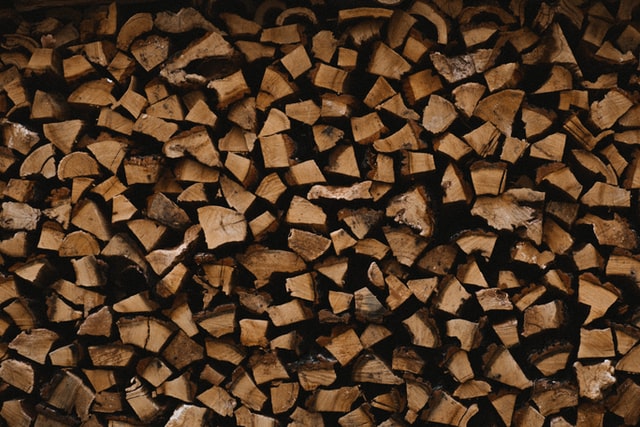
The favourite wood for arrows was aspen, although ash and birch were also used.
The process was as follows: First, the wood was split and cut to the right length. Then, it was planed with a flat plane first and then with a rounded one. Lastly, the wood was smoothed with sandstone. A notch was cut at one end for the bowstring and filled with cow horn or deer antler to prevent the arrow from splitting when placed against the bowstring.
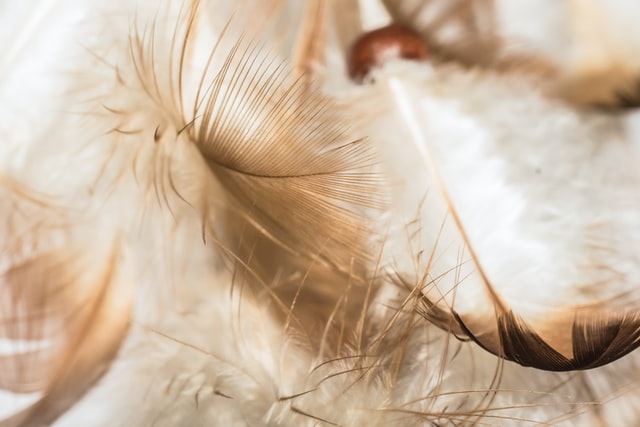
The feathers were cut from the quill and placed in grooved or notched lines at the back of the shaft. They were then sealed in with glues based on animal fat. There were only three feathers on an arrow because the side that was going to be in contact with the bow had to have none.
The arrowhead was fitted into the other end of the arrow. The arrowheads were produced by arrowsmiths.
A talented fletcher could produce about 10 arrows per hour. With a larger staff, this number could be considered larger.
The Materials of a Fletcher
Wood
- Aspen
- Ash
- Birch
Feathers
- Geese
- Swan
- Peacock
Books about Medieval Life
More Medieval Occupations

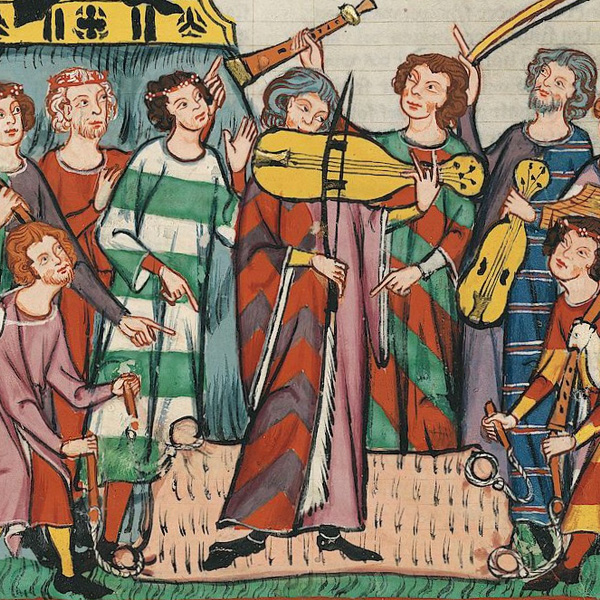
Medieval Minstrel
Medieval minstrels sang, played musical instruments, and told engaging stories. Here’s what life was like for a minstrel in the Middle Ages.
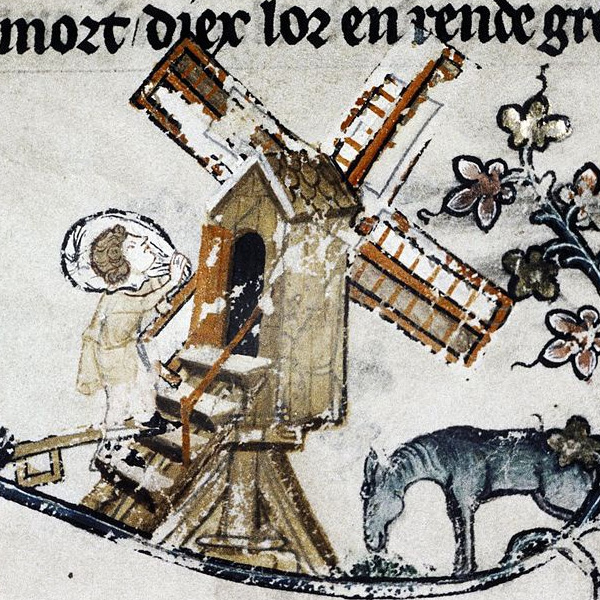
Medieval Miller
Millers were some of the most important tradesmen in the Middle Ages. Learn more about this medieval profession and how millers lived.
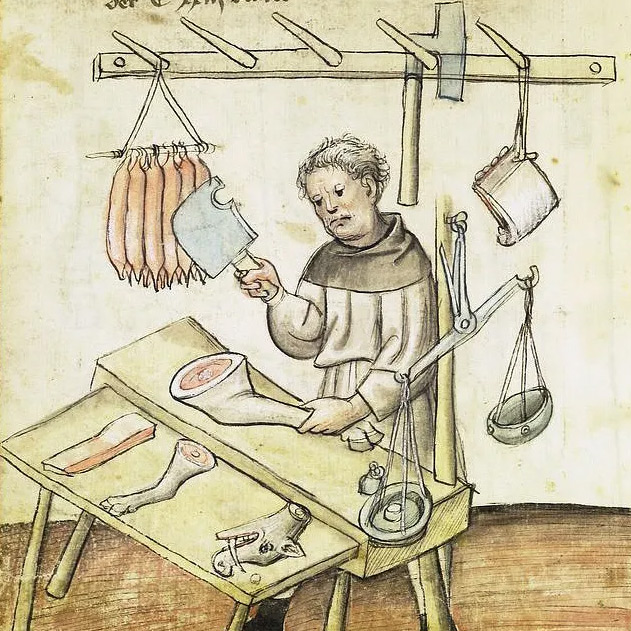
Medieval Butcher
Middle Ages butchers prepared meat, fish, and fowl for the people in a castle or a city. They sometimes had stalls in a marketplace.
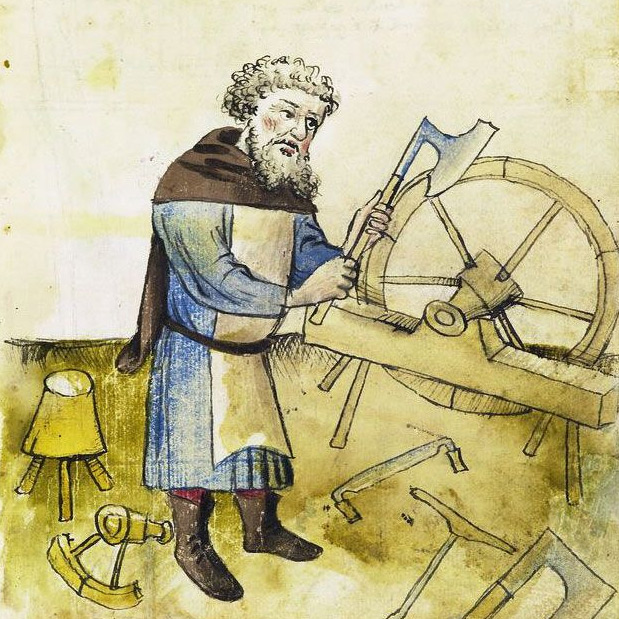
Medieval Wheelwright
Medieval candlemakers made candles from materials such as fat, tallow and beeswax.
Medieval Shoemaker
Medieval candlemakers made candles from materials such as fat, tallow and beeswax.
Medieval Shipwrights and Shipmaking
Being a sailor in the middle ages meant living a lonely and difficult life, as they would often set sail for months or even a year at a time.