
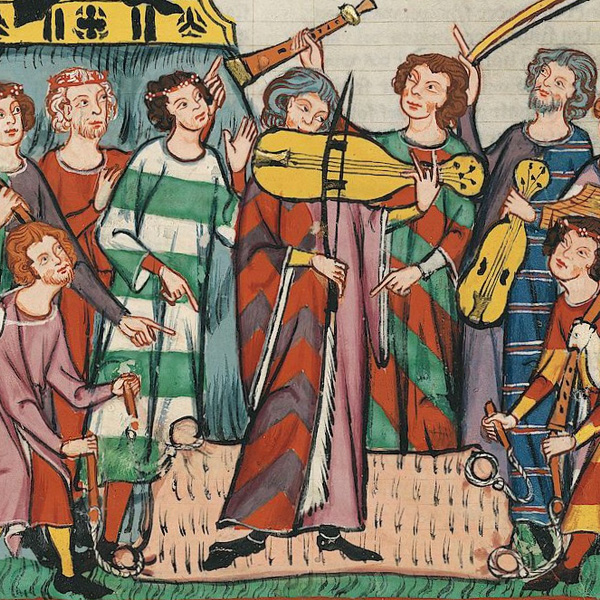
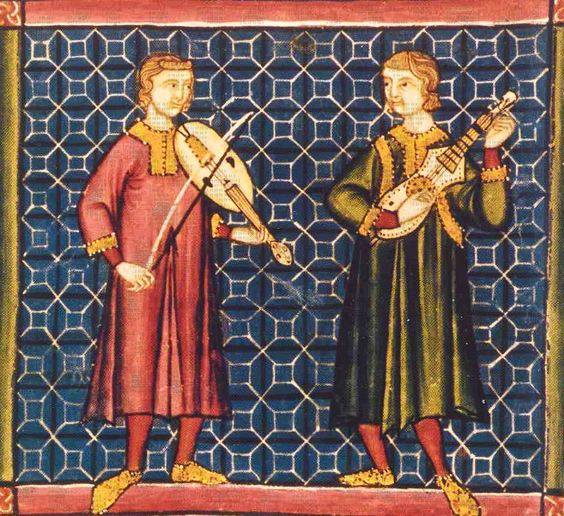
Medieval minstrels were musicians and poets that sang, played musical instruments, and told engaging stories. They were often part of a court or noble household and performed for lords and ladies, but they also sang and told stories to ordinary people in town squares, markets, and taverns.
Minstrels played various musical instruments, such as the lute, harp, and flute, and they sang songs ranging from religious hymns to bawdy and humorous tunes. They also recited poetry and told stories, often about legendary heroes and their adventures.
Here’s what life was like for a minstrel in the Middle Ages.
The Minstrel in Medieval Times
The occupation of minstrel developed over several centuries. The term “minstrel” comes from the Latin word “ministerialis,” which means “servant” or “attendant.” In the early Middle Ages, minstrels were often employed by the aristocracy and served as entertainers and musicians at court. They were highly skilled in music, song, and dance and were often associated with chivalry and courtly love.
During the high Middle Ages, from the 11th to the 13th centuries, minstrels became more widespread and began to perform for a wider audience. They traveled from town to town, performing in marketplaces, taverns, and festivals. They were known for their ability to improvise songs and poems on the spot, often about current events or local personalities.
By the late Middle Ages, from the 14th to the 15th centuries, the role of the minstrel had changed. They were no longer simply entertainers but also had a social and political function. They were often employed by the nobility to spread propaganda and promote the interests of their patrons. Minstrels also played a role in the development of literature, as they were often the first to perform and popularize new works of poetry and song.
What Was Life Like for Medieval Minstrels?
Minstrels were highly respected for their skills, and many could make a good living from their performances. However, they were also subject to the laws and customs of the time, which could be harsh. For example, in some areas, minstrels were required to obtain a license to perform, and failure to do so could result in imprisonment or even death.
Despite their importance, minstrels were often considered to be of low social status and were subject to persecution and discrimination. They were frequently associated with beggars, thieves, and other disreputable groups and were sometimes accused of spreading heresy or other subversive ideas. However, despite these challenges, the tradition of the minstrel continued to flourish throughout the Middle Ages and beyond.
Types of Musical Instruments Played by Minstrels
Minstrels played several different musical instruments. Not all of these exist today, so let’s go through them in a little more detail, shall we?
The Lute
A medieval lute was a plucked string instrument that was popular throughout Europe during the Middle Ages. It was pear-shaped with a rounded back, and typically had a soundboard made of spruce or cedar. The lute had a fretted neck with gut strings, which were plucked with a plectrum or with the fingers of the right hand.
The Harp
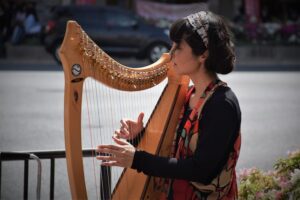
Harps were stringed musical instruments also popular in Europe during medieval times. A harp had a triangular or arched frame with a soundbox at the bottom and a curved neck at the top. The strings were made of gut and were stretched from the soundbox to the neck of the harp.
The Flute
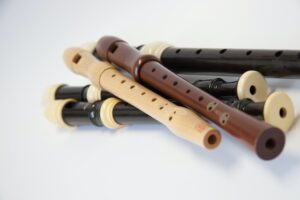
Medieval flutes were made of wood, typically of a single piece of it with finger holes drilled into it. The flute was a simple wind instrument without keys or valves, and the player had to cover and uncover the finger holes to produce different pitches. The medieval flute was usually played vertically.
The Bagpipe
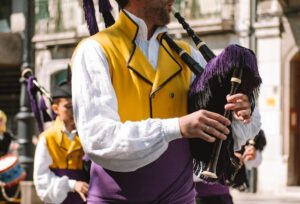
Medieval bagpipes were similar to modern-day Scottish ones but relatively softer-sounding. They also had fewer drones, according to pictures. Bagpipes in the Middle Ages were mouth-blown and had a conical bore and a large round bag. Unfortunately, no such instruments have survived, so this is impossible to verify.
Books about Medieval Life
More Medieval Occupations

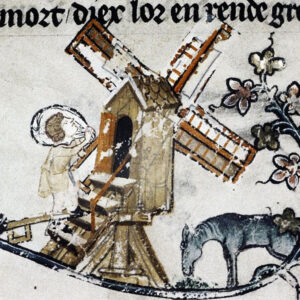
Medieval Miller
Millers were some of the most important tradesmen in the Middle Ages. Learn more about this medieval profession and how millers lived.
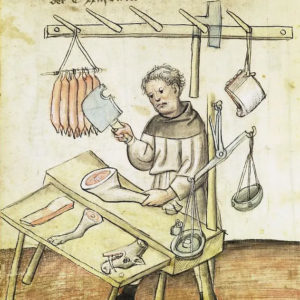
Medieval Butcher
Middle Ages butchers prepared meat, fish, and fowl for the people in a castle or a city. They sometimes had stalls in a marketplace.
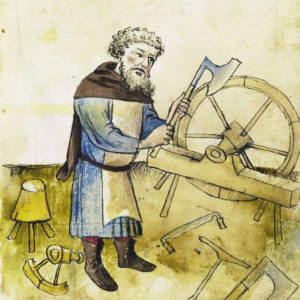
Medieval Wheelwright
Medieval candlemakers made candles from materials such as fat, tallow and beeswax.
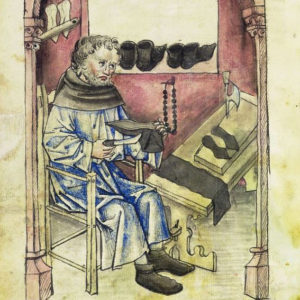
Medieval Shoemaker
Medieval candlemakers made candles from materials such as fat, tallow and beeswax.
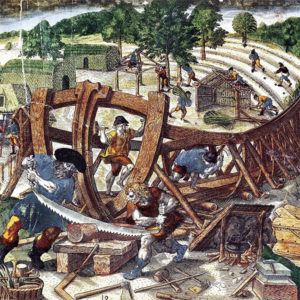
Medieval Shipwrights and Shipmaking
Being a sailor in the middle ages meant living a lonely and difficult life, as they would often set sail for months or even a year at a time.

Medieval Stable Master and Grooms
Medieval Stable Master and Grooms were responsible for horses and stables.