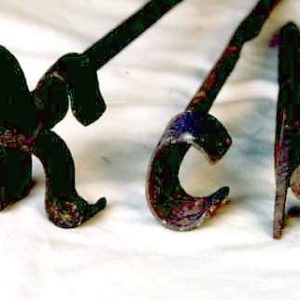
Branding irons are one of the clearest examples of how punishment in medieval and early modern societies was designed not only to cause pain, but to leave a lasting social scar.
Unlike torture devices used in hidden interrogation chambers, branding was often a public, legal act. Its purpose was not simply suffering in the moment, but permanent identification and lifelong shame.
Branding in Medieval Times
Branding involved pressing a heated metal iron onto a person’s skin to burn a mark into the flesh. The result was a permanent scar, sometimes shaped as a symbol, letter, or emblem associated with a particular crime.
The act itself was brutally painful, but the deeper intention went beyond physical injury. Branding turned the human body into a record of wrongdoing, making punishment visible long after the sentence was over.
Branding was widely used because it served several functions at once. It punished through intense pain, but it also acted as a form of control. In a world without modern identification systems, a branded mark allowed authorities to recognize repeat offenders and ensured that communities could identify someone who had been officially condemned.
It was, in effect, a permanent label: the person could never fully escape their past.
Public Spectacle and Social Consequences
Branding was often performed publicly, sometimes alongside other punishments such as whipping or the pillory. The community was meant to witness the act, reinforcing the power of the state and the disgrace of the offender.
The mark left behind could destroy a person’s ability to find work, marry, or reintegrate into society. In that sense, branding was not just physical punishment—it was social exile written onto the skin.
Was Branding a Real Medieval Torture?
Although branding was often categorized as punishment rather than interrogation, it shared many qualities with torture. The pain was immediate and extreme, the injury was irreversible, and the psychological impact could be lifelong.
In some cases, branding was used in ways that blurred the line between legal sentencing and deliberate cruelty. Marks might be placed on highly visible parts of the body—face, forehead, or hands—to maximize humiliation. The goal was not only to hurt, but to degrade.
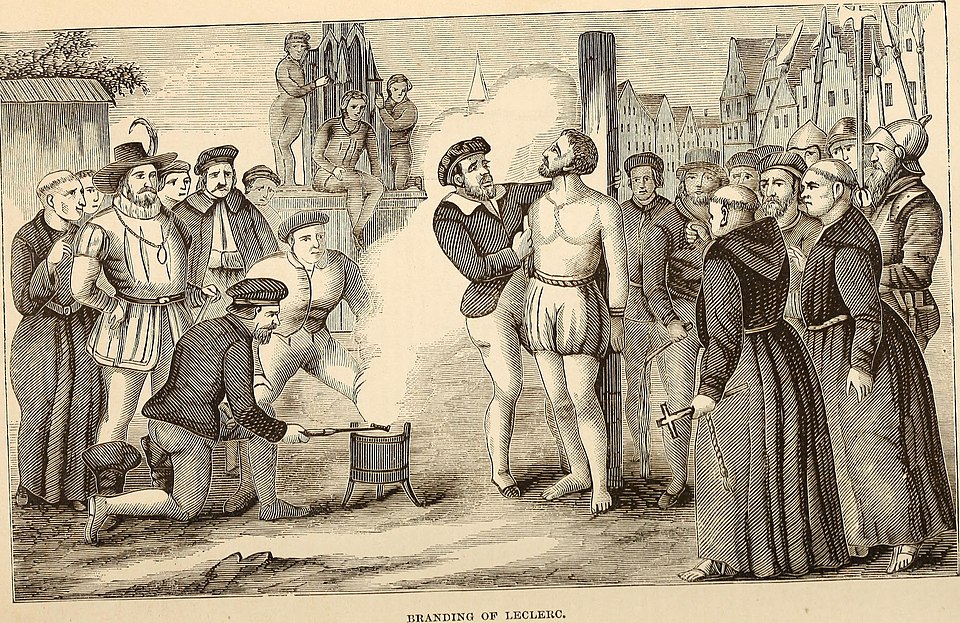
Crimes That Led to Branding
Branding was commonly used for offenses that authorities wanted to mark as socially dangerous or morally corrupt. Thieves, deserters, enslaved people, heretics, and others labeled as criminals could be branded to ensure they carried proof of their status wherever they went.
Different regions developed different symbols, making branding part of an official system of punishment.