
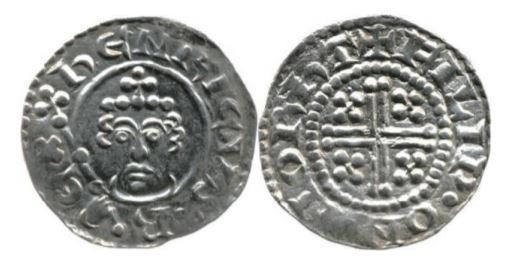
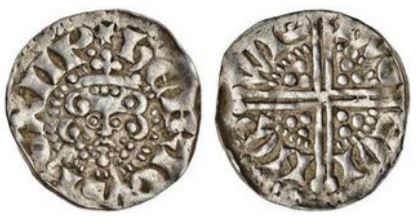
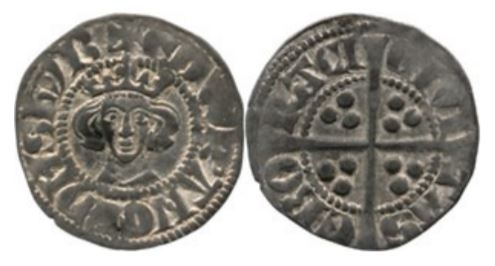
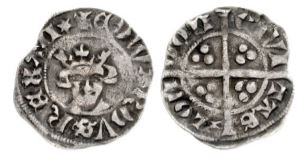
The coins of medieval Britain are very standardised, usually giving details of the issuing mints and the moneyer. The first coins were struck in Britain over two thousand years ago and have since been used for monetary exchange as well as transformed into jewellery and used for ceremonial purposes.
This article’s aim is to provide a thorough (albeit simplified) list of the coins used in Medieval Britain. The classification follows that suggested by the British Museum.
Early coinage (c.600-860s)
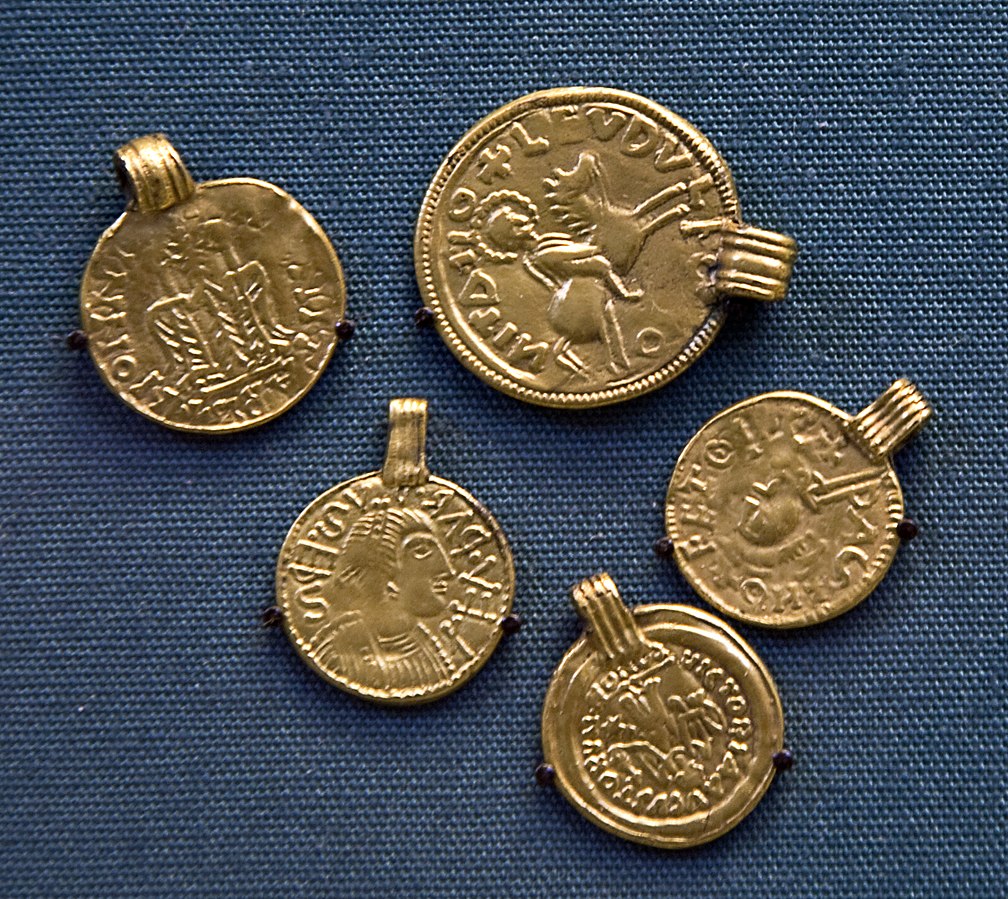
Gold coins emerged on a small scale inspired by imported Merovingian coins, followed by a much more extensive silver currency.
Shilling/Tremissis/Thrymsa
Early 7th century
Diameter: 12mm
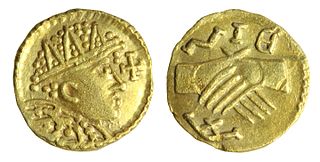
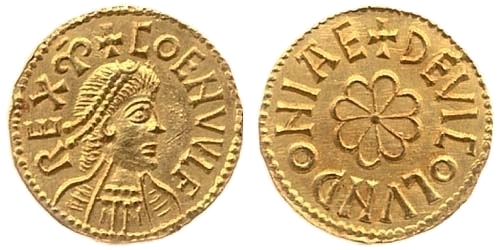
The first indigenous English coins imitated Frankish tremisses with occasional Roman or Byzantine influences. They were struck in Kent, London and probably York. There were a few different designs, but their obverse usually shows a bust and some form of reverse cross. Some coins have inscriptions.
Penny/Sceat/Sceatta
Circa 660-mid 8th century
Diameter: 12mm
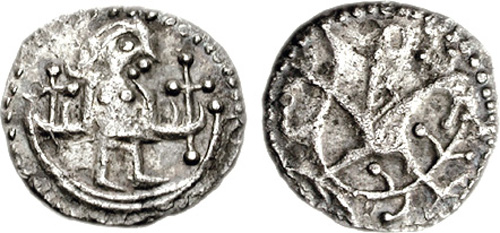
The silver penny emerged c.660-680 after a transitional phase of gold coins. The name derives from Old English sceatt, meaning “wealth”, “money”, and “coin”. Silver pennies were small and thick, and of a similar size to the gold shillings. Also varied in design, they featured busts, crosses, plants, birds and animals. Sceattas rarely carry legends, with the exception of some runic moneyers.
Penny/Styca
Late 8th and 9th centuries
Diameter: 13mm
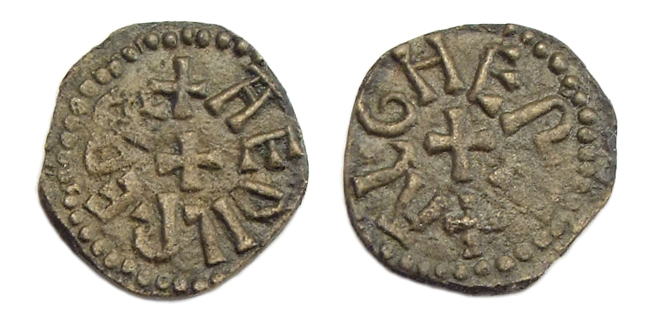
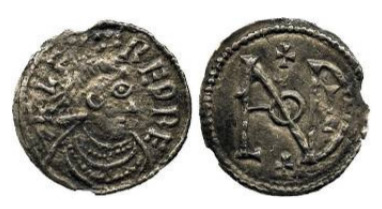
The styca was a small coin minted in pre-Viking Northumbria, produced in large quantities. They were initially made from a debased alloy of silver, and from c. 830 until c. 835 they were also minted in a copper alloy. The various issues of stycas share a common design standard: the name of the issuing king surrounding a central cruciform design, and the name of the moneyer on the other side.
Broad Penny Period (from c.760)
In the mid-eighth century and inspired by developments on the
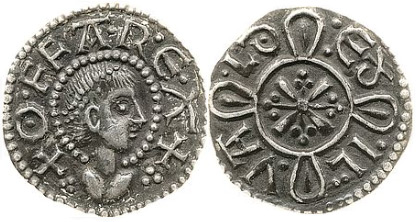
continent, the style of the coinage changed. It was King Offa who introduced the broad penny to southumbrian England on a substantial scale. There were three mints: Canterbury, London and somewhere in East Anglia. The new coins were broader and thinner than the previous pennies, and carried (for the next 300 years) the name of the King and the moneyer responsible for their striking.
Penny
From c.760
Diameter: 20-22mm
Usually made of silver, pennies most often featured busts and cross designs, and some of them horizontal inscription types.
Halfpenny
From c.760
Diameter: 16mm
Of a similar design to the pennies.
Mancus
From c.760
Diameter: 20mm
The design of the mancus varies under Offa, with the later ones being similar to pennies. Made of gold, a mancus made it worth about a month’s wages for a skilled worker.
Norman Coins (1066-1154)
Coinage in the aftermath of the Norman Conquest is surprisingly similar to that which preceded it. There were over 70 mints active in the reigns of the first two Norman kings.
William I and II (1066-1100)
There are 13 types of coins bearing the obverse inscription of William (eight for William I and five for William II):
Henry I (1100-1135)
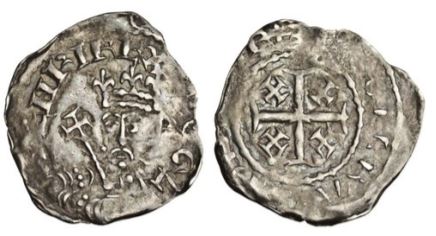
In 1108 Henry dictated a reform decreeing that all coins had to be snicked prior to leaving the mint to prove the coin was not a plated forgery.
Stephen (1135-1154)
Four main types were minted for Stephen during the civil war.
Cross and Crosslets (1158-1180)
In 1158 the coinage was reformed by Henry II, adding to the currency pool without the older pieces being recalled. Due to poor manufacturing, these coins are often ill struck, with only parts of the bust or inscription legible.
Cross and Crosslet
1158 to 1180
Diameter: 20mm
The design of the cross and crosslet has a very uniform appearance since the same coin type was issued simultaneously from all mints.
Short Cross (1180-1247)
Struck by Henry II in 1180 and continued to by his sons Richard I and John, and grandson Henry III. This coin didn’t suffer any changes to the obverse, which bears the inscription ‘Henricus’.
Short Cross
1180 to 1247
Diameter: 20mm
The coins can be divided into 8 different classes and they all bear the name of the moneyer and the mint that produced them. Some classes can also be distinguished by differences in the shape or style of lettering used.
Long Cross (1247-1279)
A new design was introduced in 1247, extending the reverse cross to the edge of the coin to prevent clipping and consequential reduction of the weight and value of the silver content of the coin.
Long Cross
1247 to 1279
Diameter: 20mm
The coins were issued under Henry III and the early reign of Edward I (1272-1307). The long cross made it easier to cut the coin into halves and quarters, thus producing halfpennies and farthings. The series is divided into 7 main types with various sub-classes.
Sterling Pennies (1279-c.1333)
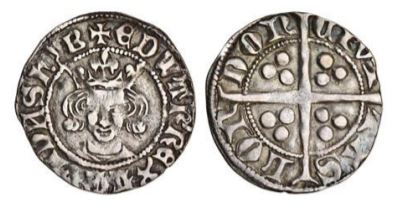
Edward I instituted a major reform of the coinage in 1279. The moneyer’s names were removed from the coins.
Sterling Penny
1279 to c. 1333
Diameter: 20mm?
The design involved a new, more realistic bust on the obverse of the coin, and a solid cross on the reverse. The Edwardian sterlings are grouped into 15 classes.
Silver Coins of Edward III and Richard II (1279-c.1333)
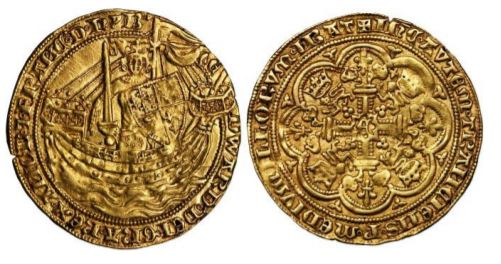
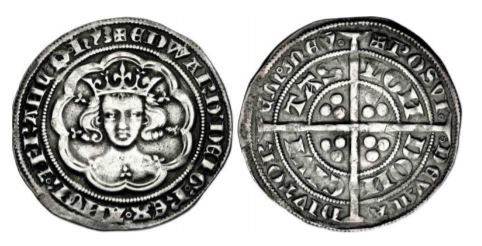
King Edward III’s reign lasted 50 years and saw considerable success in both military campaigns and developments in English government. His coins include gold coins in the Groat and Noble style, with full, half and quarter denominations.
Star-Marked or 2nd Coinage
1335-1343
This coin was produced in Halfpennies and farthings only. The main mints were London and Reading.
Florins or 3rd Coinage
1344-1351
Also produced in Halfpennies and farthings, this coin is similar in design to the sterling type, except with a well-defined neck and shoulders, and a crown with large broad central fleur-de-lis.
4th Coinage
1351-1377
This coinage introduced the full range of late medieval coins. The noble, half and quarter were struck in gold, the groat, half-groat, penny, halfpenny and farthing in silver. There are three main subdivisions of the coinage and several variants in the penny legends and designs. Generally, a quatrefoil in the centre of the reverse distinguishes York pennies.
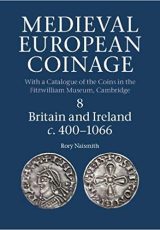
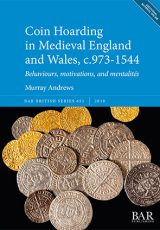
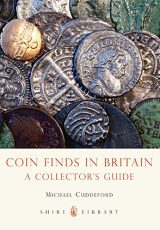
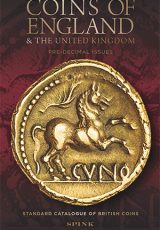
We hope this list/guide has been useful. We’re not coin experts, so please let us know if we’re missing any information! If you want to learn more about British coins, take a look at the books below (purchases give us a small fee and helps us keep the site running).
Explore Medieval Towns and Castles

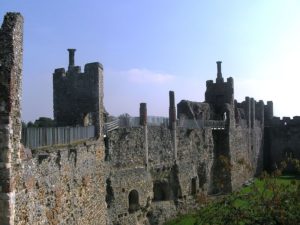
Framlingham Castle
Framlingham Castle has no central keep but a curtain wall with 13 towers.
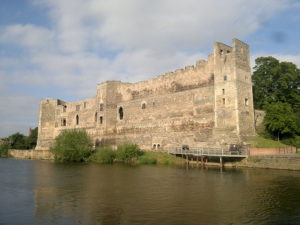
Newark Castle
Newark Castle is a 12th century castle by Alexander, Bishop of Lincoln.
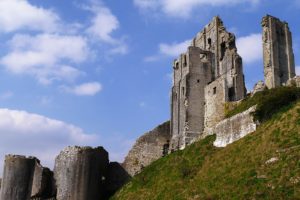
Corfe Castle
Corfe Castle is a ruined castle on the route between Wareham and Swanage.
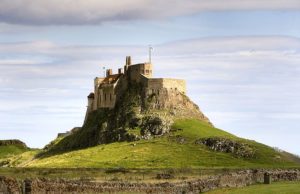
Lindisfarne Castle
Lindisfarne Castle is a 16th-century castle located on Holy Island.
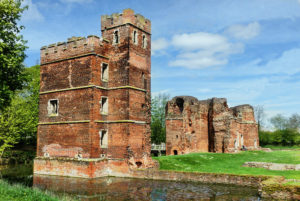
Kirby Castle
Kirby Castle is a ruined fortified manor house in Leicestershire built by Lord Hastings in 1480.
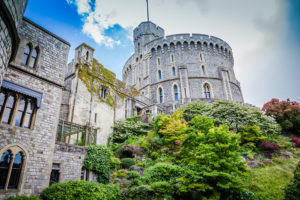
Windsor Castle
Windsor Castle is a 1,000-year royal residence in Berkshire.
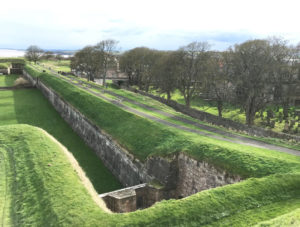
Berwick Upon Tweed Castle
Berwick-upon-Tweed Castle is a 12th Century ruined castle in Northumberland.
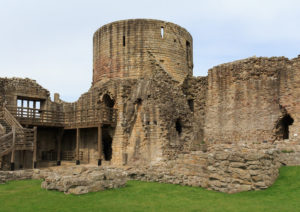
Barnard Castle
Barnard Castle is a 12th-century fortress passed to the hands of Richard III.